

 Tiếng Việt
 日本語
日本語 한국어
한국어 中文 (中国)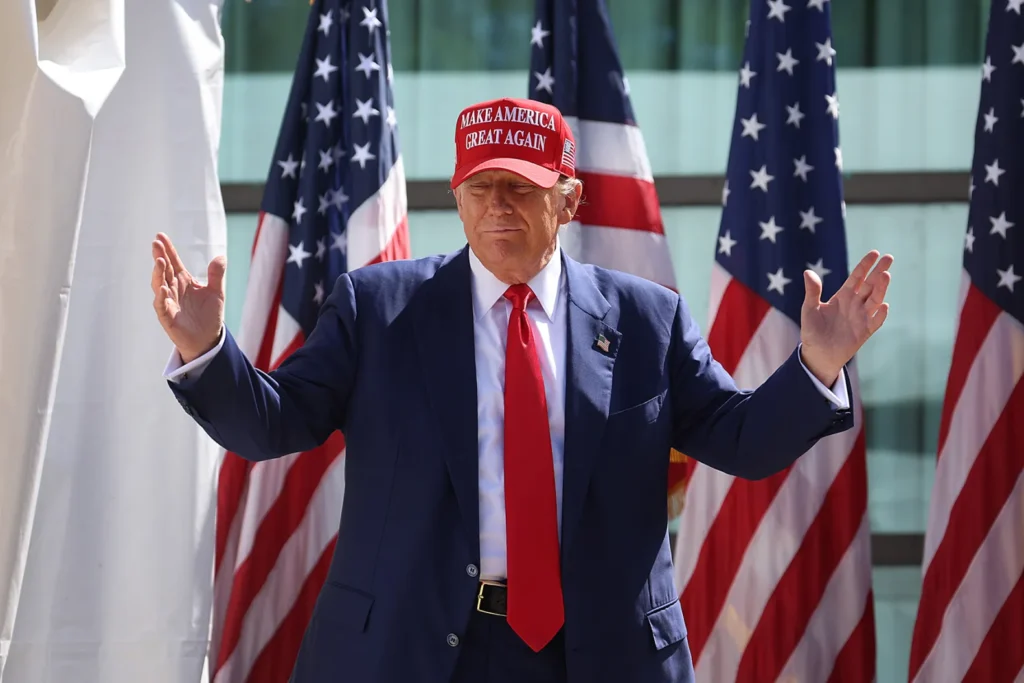
When people speak of “Make America Great Again,” many see it as an emotional or even populist campaign slogan. Yet when MAGA is examined through the perspective of Donald Trump, the individual who designed and executed it, it becomes clear that it was never a sequence of spontaneous actions. MAGA represents a consistent doctrine of power in which unpredictability and uncertainty are not weaknesses but central tools of governance.
Trump did not seek to reassure the world about the United States. On the contrary, he deliberately made allies and adversaries alike uncertain about Washington’s next move. This ambiguity created a structural imbalance in which the United States, with its superior economic scale, financial depth, and military strength, could absorb instability far better than others. Within that imbalance, Trump gained leverage.
In Trump’s thinking, a great America is not one that is universally liked, but one that is taken seriously and feared when necessary. When adversaries hesitate to test limits, when allies can no longer rely on free protection, and when global markets are forced to react to signals from Washington rather than dictate them, the United States occupies a dominant position.
A Deliberately Weaker Dollar and the Power of Monetary Uncertainty
For decades, the U.S. dollar has served as the backbone of the global financial system. Its stability allowed the United States to borrow cheaply, import at low cost, and project influence worldwide. Trump did not deny the importance of this role, but he did not treat a strong dollar as an absolute goal. Instead, he was willing to tolerate, and at times encourage, periods of dollar weakness when they served American manufacturing and trade interests.
Unexpected tariff announcements, abruptly halted and restarted trade negotiations, and public attacks on the Federal Reserve repeatedly forced financial markets to revise expectations. Each episode tended to place downward pressure on the dollar in the short term. To investors, this was instability. To Trump, it was leverage.
A weaker dollar made American exports more competitive and supported domestic production. More importantly, currency volatility made long-term planning difficult for trade partners and multinational corporations. When U.S. policy could not be confidently predicted, firms were pushed into defensive behavior, delaying investment or restructuring supply chains in ways that increasingly favored the American market. Within the MAGA framework, monetary instability was not a policy error but a deliberately applied form of strategic pressure.
Oil and the Doctrine of Cheap Energy for the American Economy
If the dollar was Trump’s financial instrument, oil was the material foundation of MAGA. He viewed energy as the base cost of the entire economy. High oil prices translate into higher transportation costs, rising production expenses, and broad inflationary pressure. Low oil prices, by contrast, ease the burden on businesses, reduce stress on consumers, and give policymakers greater room to maneuver.
By loosening environmental regulations, accelerating domestic oil and gas production, and signaling clearly that the United States was prepared to expand supply, Trump repeatedly slowed or reversed oil price rallies. Markets reacted not only to actual production figures but to expectations that U.S. supply could offset global disruptions.
In a world marked by frequent geopolitical shocks, the absence of sustained oil price spikes reflected the effectiveness of this approach. Trump used America’s energy advantage to neutralize external shocks, keep energy costs manageable, and help contain inflationary pressures.
Trade, Tariffs, and the Inflation Paradox Under MAGA
Traditional economic theory holds that tariffs raise prices and fuel inflation. Trump understood this logic, but he approached trade from a different angle. In his view, tariffs were not merely barriers but tools for restructuring the global trading system.
When heavy tariffs were imposed on steel, aluminum, and industrial goods, the immediate effect was a price shock. That shock forced companies to change behavior, relocating production back to the United States or to politically aligned countries, shortening supply chains, and reducing reliance on fragile trade routes.
Over the medium term, as domestic production recovered and cheap energy supported costs, inflationary pressure eased. This helps explain why inflation did not spiral as dramatically as many forecasts had predicted and, in certain periods, began to moderate. Trump accepted short-term disruption in exchange for longer-term cost stability.
Industrial Metals and Scrap Markets in a MAGA World
The interaction of the dollar, oil, and tariffs converged most clearly in commodity markets, particularly industrial metals. Cheaper energy reduced mining and smelting costs. Currency volatility caused metal prices denominated in dollars to fluctuate sharply for global buyers.
Protectionist policy, however, fundamentally altered this transmission mechanism. While global metal prices could soften, U.S. domestic prices were supported by tariffs and strict import standards. As a result, price gaps between regions widened significantly.
Metal scrap, especially aluminum and copper scrap, became a focal point. As domestic smelting and manufacturing were protected, U.S. demand for scrap increased. When scrap supply was retained within the United States, Asian markets faced tighter availability and rising costs. Global material flows were increasingly shaped by political decisions rather than pure supply and demand.
Willingness to Escalate and America’s Rising Political and Military Position
Unpredictability extended beyond economics into foreign and military policy. The targeted strike against General Soleimani of Iran illustrated Trump’s strategy of controlled escalation. He demonstrated a willingness to strike decisively while stopping short of full-scale war. The message was clear: the United States would act forcefully but would also control the limits of escalation.
In the case of Venezuela, Trump relied on legal and financial pressure rather than direct military intervention, turning the Venezuelan leadership into a long-term strategic liability without firing a shot. Meanwhile, his public interest in Greenland was not diplomatic theater but a signal of readiness to challenge taboos in pursuit of long-term strategic interests, including Arctic control and resource access.
Regarding Ukraine, Trump consistently pressured Europe to assume greater responsibility for its own security. The objective was not abandonment, but to force European allies to mature militarily, reduce America’s burden, and allow Washington to reallocate strategic resources.
Decisions That Appeared Impulsive but Were Carefully Calculated
Trump’s repeated attacks on the Federal Reserve were not personal vendettas. They were designed to undermine the perception of untouchable monetary independence, influence interest rate expectations, and indirectly shape the trajectory of the dollar. Trade wars followed the same logic. Tariffs were switched on and off like a lever, forcing opponents to respond continuously and negotiate from a position of weakness.
What appeared impulsive was, in reality, a sequence of actions backed by legal authority, administrative preparation, and media strategy, ready to be activated when needed. The surprise lay in timing, not intent.
Conclusion: Unpredictability as Trump’s Greatest Source of Power
MAGA was not chaos. It was controlled disorder. Trump understood that in a complex world, the side that forces others to guess gains the upper hand.
A cyclical weakening of the dollar supported exports. Restrained oil prices helped contain inflation. American trade recovered through protection and reindustrialization. The United States strengthened its political and military position because neither allies nor adversaries could be certain how far Washington was prepared to go.
Within the MAGA framework, unpredictability was not a flaw. It was power. And Trump’s willingness to do whatever was necessary, within the bounds of perceived national interest, enabled the United States, at least for a crucial period, to reclaim a rare position of strategic initiative in the global economic and geopolitical order.

ARTICLES IN THE SAME CATEGORY
Read less, understand deeply: 4 filtering layers to keep you clear-headed amid a sea of information
The art of saying “no” without offending: 7 boundary techniques for modern Vietnamese
Maintaining a slow pace of life in the era of short attention: small strategies for long-term calm
Reducing Digital Noise: 9 habits to streamline information for a lighter mind every day
Heavenly Officials in Vietnamese Folk Belief: Bestowers of Blessings from the Celestial Realm
The Judge Figures in Vietnamese Folk Belief: Guardians of Justice in the Afterlife
ARTICLES IN THE SAME GENRE
The Epstein Files and the Shadow of Power: When Dark Rumors Reflect Back Through Cinema
Why Does War Always Erupt in Human Society?
Religious Faith: Good, Evil, and the Journey from Enlightenment to Fanaticism
What to Note about “Apocalypse,” “Degenerate Dharma,” and Prophetic Culture
The Dark Side of the Internet and the Spread of Harmful Information
The Body’s Response to Fear