

 Tiếng Việt
 日本語
日本語 한국어
한국어 中文 (中国)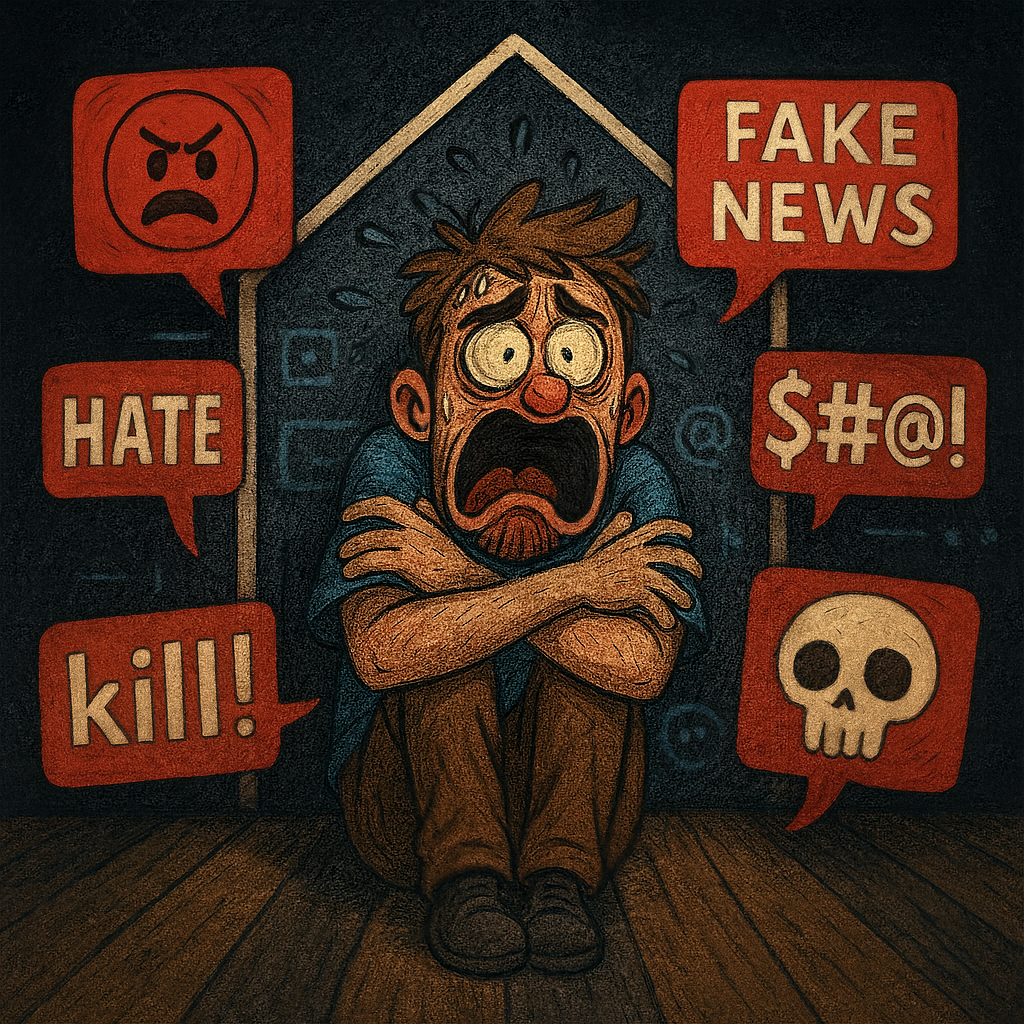
The internet was once envisioned as a doorway to a world of freedom, where knowledge flowed without borders and people could learn, work, and communicate with just a few clicks. Yet as we advance deeper into the digital age, we realize that behind the radiant light of the information era lies a vast shadow. In that shadow, rumors, hatred, prejudice, harmful news, and distorted images circulate at speeds far greater than the truth itself. An old Vietnamese saying teaches, “Words can carry blood,” a reminder of the immense weight of language. On the internet, where a single sentence can be multiplied millions of times. This weight can become a burden on both individuals and society.
1. The Dark Side of the Internet: When Freedom Becomes a Double-Edged Sword
The internet was created to serve knowledge, but it also opened the door for everything to spread, including deception and toxicity. Its anonymity and borderlessness allow people to abandon responsibility for their words. An ordinary individual can become a “keyboard warrior,” and a trivial rumor can become the center of attention for millions.
In the past, spreading falsehood required effort and time. But now, a single edited image, an out-of-context video, or a careless post is enough to cause chaos. Another Vietnamese saying captures this well: “A fabricated tale travels farther than a hundred truths.” The digital era amplifies this reality like never before.
2. How Toxic Information Spreads So Easily
Harmful information does not spread quickly because people have become worse; it spreads because the internet taps into deep-rooted psychological mechanisms. Humans naturally pay more attention to danger, negativity, and the unusual, an instinct preserved from ancient survival needs. Shocking information triggers stronger cognitive reactions than neutral facts.
Social media algorithms, designed to maximize engagement, prioritize any piece of content that receives clicks, shares, or comments. Unfortunately, sensational or alarming information tends to attract more interaction. Algorithms, unintentionally, become engines that magnify harmful content.
As another Vietnamese proverb warns: “A small fire not extinguished becomes a wildfire.”
A harmful rumor, if left unchecked, quickly grows beyond control.
3. How Toxic News Affects the Human Mind
The human mind is like fertile soil, what is planted will grow. When constantly exposed to harmful content, violent imagery, and toxic commentary, the brain gradually shifts toward negativity.
Studies in media psychology show that prolonged exposure to negative news increases anxiety, depression, mistrust, and emotional instability. People become more easily angered, more cynical, and more fearful of dangers that may not exist.
The proverb “Near ink, you become black; near light, you become bright” illustrates how digital environments shape thinking. Social media blends both “ink” and “light.” Without selective awareness, the “ink” easily overwhelms the mind.
4. How Repetition Turns Falsehood Into “Truth”
One of the most dangerous aspects of the internet is its ability to transform lies into “truth” through repetition. This relies on a psychological mechanism known as the illusory truth effect, where repeated information, regardless of accuracy, gradually becomes believable.
Online, repetition occurs rapidly. A fabricated story shared by a small group can be copied across platforms and reframed as fact within hours.
Vietnamese wisdom captures this phenomenon: “Say it often enough and lies sound like truth.”
Rumors about public figures, companies, or government policy often evolve this way. Even when debunked, some people continue to believe the false version because it has already imprinted itself on their memory.
5. Why Harmful Images and News Spread More Strongly
The explanation lies partly in human psychology and partly in digital algorithms. Shocking, violent, or provocative imagery activates strong emotional reactions. People are naturally drawn to the abnormal or dangerous.
Positive or educational content rarely evokes the same intensity. A wholesome story may warm the heart momentarily, but a disturbing image shocks instantly and that shock creates engagement.
As a Vietnamese saying goes: “Bad news travels far, good news stays near.”
The internet has turned this truism into a daily reality.
6. The Internet as a Breeding Ground for Extremes
Not only does the internet spread harmful information, it also cultivates extremism. Algorithms continuously feed users content similar to what they previously engaged with, creating digital “echo chambers.”
Someone curious about conspiracy theories will see more conspiracy theories.
Someone angry at a policy will see content that intensifies their outrage.
A teenager exploring violent content will soon be surrounded by more of it.
As the proverb says: “Seeing others bright, one assumes oneself bright.”
But online, what we see is often just a reflection of our own preferences, not the world.
7. Social Consequences: Eroded Trust and Fragile Truth
When toxic content dominates, public trust deteriorates. People become suspicious, confused, and divided.
Even obvious truths begin to seem uncertain.
The Vietnamese say: “Rumors bring chaos, mistrust brings downfall.”
The modern digital landscape exemplifies this more clearly than any prior era.
8. A Path Forward: Humans Remain the Key
Despite the darkness, people still hold the power to shape the internet responsibly.
Truth requires defenders.
Knowledge requires discernment.
And society requires individuals who can stay level-headed amid digital storms.
As another saying reminds us: “One must learn to eat, learn to speak, learn to wrap, and learn to open.”
In the digital age, we must also learn how to use the internet wisely.
Not everything on the screen is true.
Not every image reflects reality.
Not every story repeated thousands of times should be believed.
Awareness is our best protection against the chaos of misinformation.

ARTICLES IN THE SAME CATEGORY
Read less, understand deeply: 4 filtering layers to keep you clear-headed amid a sea of information
The art of saying “no” without offending: 7 boundary techniques for modern Vietnamese
Maintaining a slow pace of life in the era of short attention: small strategies for long-term calm
Reducing Digital Noise: 9 habits to streamline information for a lighter mind every day
Heavenly Officials in Vietnamese Folk Belief: Bestowers of Blessings from the Celestial Realm
The Judge Figures in Vietnamese Folk Belief: Guardians of Justice in the Afterlife
ARTICLES IN THE SAME GENRE
The Epstein Files and the Shadow of Power: When Dark Rumors Reflect Back Through Cinema
MAGA and the Power Doctrine of Unpredictability: Why Donald Trump Turned Uncertainty into America’s Strategic Advantage
Why Does War Always Erupt in Human Society?
Religious Faith: Good, Evil, and the Journey from Enlightenment to Fanaticism
What to Note about “Apocalypse,” “Degenerate Dharma,” and Prophetic Culture
The Body’s Response to Fear