

 Tiếng Việt
 日本語
日本語 한국어
한국어 中文 (中国)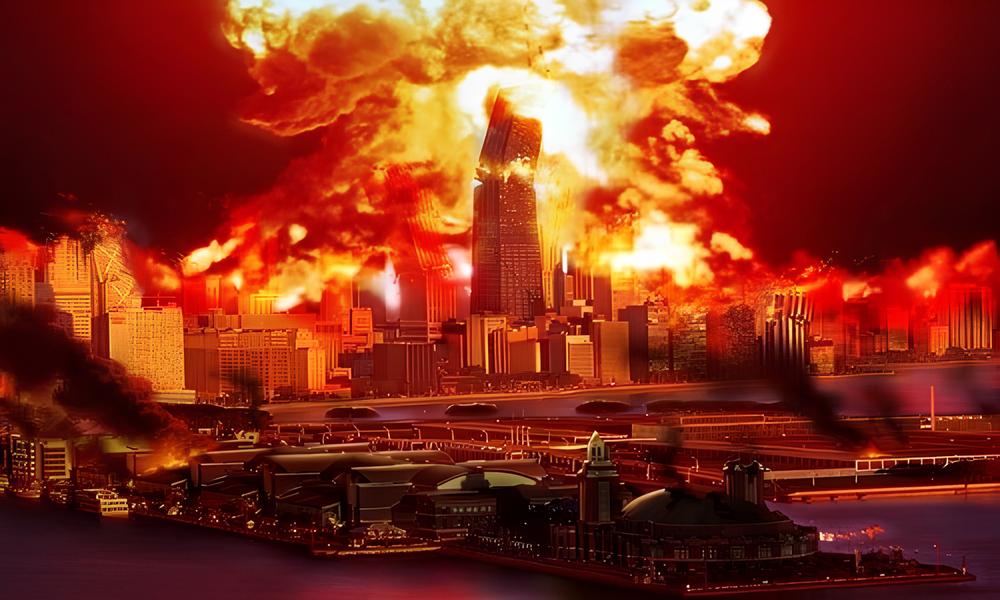
Before delving into specific traditions, it is necessary to distinguish between two often-confused concepts: “apocalypse” in the core sense of the absolute end of history and the universe, and “apocalypse” in the cultural and spiritual sense. The phenomenon of moral decay, social crisis, natural disasters, and wars (often referred to as the “Degenerate Dharma Age” or Mappō in the Buddhist context, or the “End Days” in Abrahamic traditions). In many traditions, descriptions of great calamities are not just forecasts of physical annihilation but metaphors calling for conversion, repentance, and spiritual preparation for a new era. Therefore, when reading prophecies, we must place them within their cultural context. They serve simultaneously as a sociopolitical alarm and a mythological script that helps the community process anxiety in the face of upheaval. (For research on the conceptual framework of Mappō/Decline of the Dharma and its historical significance, refer to studies in religious research).
Buddhism and the Degenerate Dharma Age (Mappō): Images of Decline and Advice for Overcoming
In the Buddhist tradition, the concept of the “Degenerate Dharma Age” (Mappō, Mofa, depending on language and school) describes a period of decline of the Dharma (the Buddha’s teaching), where the teachings become less effective, morality diminishes, and people’s hearts stray from the path of enlightenment. Historical observation shows that during times of crisis, movements like Pure Land, Zen (Chán), or Nichiren Buddhism flourished with the promise of salvific methods suitable for the age of decline. Examples include reciting the name of the Buddha (nien-fo/nembutsu), chanting sutras, or practicing expedient means to accumulate merit and maintain the spiritual connection. Here, the “apocalypse” is not necessarily the end of the cosmos but a threat to the ability to practice and propagate the Dharma; however, Buddhist texts also describe scenes of cosmic disorder, war, and famine in the context of moral decay. To overcome this, the tradition suggests a return to the fundamentals: strengthening precepts, practicing meditation, chanting the Buddha’s name, and focusing on generosity (dāna). That is, increasing merit and wisdom, laying the foundation for a moral rebirth when the new age begins. The idea that individual practice can “preserve” humanity when society collapses is a notable feature of Buddhist eschatology.
Christianity: Revelation, Imagery, and the Final Judgment
Images of the “End of Days” in Christianity are largely envisioned through the Book of Revelation and other New Testament letters. Revelation uses strong symbolic language: the seven seals, the seven trumpets, and the Four Horsemen symbolize war, famine, plague, and death. These images are used to articulate an end-time scenario accompanied by judgment and the appearance of a new order (the New Jerusalem). A central figure in the Christian tradition is the “Antichrist,” an image of a figure who leads to the persecution of the faithful before the final saving intervention occurs. Historically, narratives of Revelation have been read either as literal historical predictions (to explain events like the persecution under the Roman Empire) or symbolically, representing anti-God forces in every era. Like Buddhism, Christianity contains elements of cosmic catastrophe alongside a focus on moral meaning: the call for repentance, perseverance in faith, and righteous living is the path to spiritual “survival.”
Islam: Signs, the Dajjal, Yajuj and Majuj, and the Return of Isa
In Islam, belief in the Day of Judgment (Yawm al-Qiyamah) is central and is accompanied by a system of signs, divided into minor and major signs. Major signs include the appearance of the Dajjal (the Great Deceiver, analogous to the Antichrist concept), the descent of Isa ibn Maryam (Jesus) to destroy the Dajjal, the outbreak of Yajuj and Majuj (Gog and Magog), and great natural events such as three massive land collapses and an encompassing smoke cloud. These descriptions in the Hadith (sayings of the Prophet Muhammad) highlight a scenario of rampant chaos that will be quelled by divine intervention, culminating in the judgment of mankind. Similar to other traditions, Islam emphasizes that steadfastness in faith, good deeds, and adherence to the law are the keys to “overcoming” the final day.
Judaism: The Messianic Age, Gog and Magog, and the Prospect of Resurrection
In Judaism, the “End of Days” is closely linked to the concept of the coming of the Messiah, the restoration of the Kingdom of Israel, and the judgment of the nations. Original scriptures like the Book of Daniel and prophetic texts (Isaiah, Ezekiel) describe the image of the “Son of Man” and great battles like Gog and Magog; following these upheavals, there will be an era of peace and religious revival. Unlike many apocalyptic descriptions that highlight total destruction, Jewish imagination often incorporates elements of restoration, justice, and law, a future re-established according to the covenant commitment between God and the people. “Salvation” thus has both a collective (national) and a moral-communal dimension.
Folk Prophecies and Famous Seers: From Trạng Trình to Nostradamus, Baba Vanga, Edgar Cayce
Alongside religious traditions, human history has produced many folk seers and famous “divine strategists.” In Vietnam, Nguyễn Bỉnh Khiêm, known as “Trạng Trình” (The Mentor/Statesman), left behind short, vague, yet image-rich prophecies that have been passed down and interpreted by the common people and historical accounts for many historical events. Such prophecies are often highly allegorical, allowing for multiple readings across different eras. In Europe and the wider world, the reputation of Nostradamus (Michel de Nostredame) stems from his “Centuries,” a collection of allegorical quatrains; his texts have been widely interpreted to “decode” many historical events, although this reading is often speculative and post hoc. Modern “prophets” like Baba Vanga and Edgar Cayce also left a series of predictions about disasters, climate change, epidemics, and sometimes apocalyptic scenarios. These sources always come with two extremes: for believers, they are messages of warning and guidance; for historians and critics, they are cultural phenomena—the way communities seek answers to anxieties through prophetic memory. When examining these prophets, readers need to be aware that many predictions are vague and easily interpreted according to historical circumstances.
The Diversity of “Year Predictions” and the Ambiguity of Numbers
A point of frequent misunderstanding when discussing “apocalyptic prophecies” is the tendency to look for a precise calendar year. In reality, most major religious traditions refuse to announce a specific date: the words of the Buddha or Buddhist sutras rarely set the date of the end of the world by the Gregorian calendar; Revelation uses symbols, not exact dates; in Islam, the Hadith warns but also advises that no one knows the “Hour” except God. Folk and modern prophets sometimes give timelines, but those milestones are often debated, varied, or given added meaning in subsequent interpretations. Even the famous “year predictions” in modern journalism (such as the milestones of 2000, 2012, or the years media attribute to Nostradamus/Baba Vanga) are often the result of modern interpretation rather than the original text. Therefore, when encountering these numbers, caution is needed, and one must question the source, context, and how the text was translated or decoded.
Cross-Religious Commonalities: Patterns, Symbols, and the Moral Message
If we read the traditions side-by-side, a few common points emerge. First is the pattern of “decline, crisis, divine intervention, judgment, or revival”: in every tradition, the end-time story is not just a list of calamities but a closed loop with the potential for a new beginning. Second is the motif of the “challenger/antagonist” (Antichrist, Dajjal, the forces of Gog and Magog) used to personify the forces of societal destruction, lust for power, deceit, and violence. Third is the warning about nature: natural disasters, epidemics, scarcity, and astronomical phenomena often appear in the descriptions, as manifestations of a disordered cosmic order. Finally, every school of thought contains a moral reminder: repentance, conversion, increasing merit, and preserving the community are the paths believers are called to walk to “survive” in a spiritual sense. These commonalities show that prophecy is often a cultural response to anxiety, serving both a predictive and a community-therapeutic function. (Scholarly analyses of Revelation, Islamic Hadith, Jewish prophetic books, and Mappō texts all confirm these motifs).
Prophecies on “How to Overcome” the Apocalypse: Practice, Migration, or Salvation?
Religious texts and prophetic legends often come with guidance. This guidance is not always detailed survival tactics (e.g., “run to mountain X, hide in cave Y”) but usually reminders about attitude and action. In Buddhism, the key is the practice of accumulating merit, reciting the Buddha’s name, or cultivation to preserve the human heart; in Christianity, it is repentance, continuing to live virtuously, and maintaining faith; in Islam, it is strengthening iman (faith), doing good deeds, and seeking refuge through prayer; in Judaism, it is returning to the covenant, adhering to the law, and awaiting the salvation of the Messiah. At the folk level or among modern prophets, there are sometimes “practical” instructions, such as preparing food, finding shelter, or migrating. But these instructions are often post hoc interpretations or recommendations from survivalists, rather than the orthodox spirit of major religions. The general observation is: overcoming the “apocalypse” in classical traditions is first and foremost a spiritual, moral, and communal victory; physical survival may be ensured by material means, but spiritual quality is what the traditions emphasize most.
The Problem of Interpretation and Politicization of Prophecy
An important point when approaching prophecy is recognizing how it is interpreted to serve political or social interests. Throughout history, vague prophecies have often been reinterpreted to legitimize power struggles, justify movements, or appease the populace. Furthermore, the origin and authenticity of some famous “prophecies” (e.g., the “Prophecy of the Popes” attributed to St. Malachy) are questioned; many historians suggest that some “prophetic” texts are actually later fabrications, written at an opportune moment to influence public opinion. Therefore, caution is needed, and one must always ask historical questions: Who wrote the text, when was it published, and who benefited from that interpretation? Many modern “prophecies” circulating in the press or on social media lack verification, confusing the public between belief, rumor, and news.
Vietnamese Prophecy: Nguyễn Bỉnh Khiêm and the Culture of Interpretation
In Vietnam, the prophetic tradition like “Sấm Trạng Trình” (The Prophecies of Trạng Trình) by Nguyễn Bỉnh Khiêm holds a special place: it is both a literary heritage and a source of political-moral reference. The proverbs are often short, rich in imagery and allegory, and thus have been interpreted by subsequent generations throughout history according to the context of each era. This shows a characteristic of Vietnamese prophetic culture: the main function is not scientific prediction but moral recommendation and social warning. The prophecies were used to inspire patriotism, remind the court, or explain historical events, and rarely had the exact predictive nature of an end-of-days calendar date. When compared to Western prophecy, Sấm Trạng Trình carries a strong local flavor, focusing on the destiny of the nation and social morality rather than an ultimate cosmic scenario.
Modern Prophecy: Between Mystical Vision and Media Market Decoding
Figures like Nostradamus, Baba Vanga, and Edgar Cayce draw attention from modern media and the public for one reason: they wrote/predicted in language that is easily evocative and are republished repeatedly during times of crisis. However, scholars emphasize the necessity of historical criticism: many prophecies are interpreted post hoc. That is, after an event occurs, people search for suitable words to “match” the reality. Therefore, demanding that these prophets provide an exact “year prediction” for the apocalypse is unrealistic. Their main role in popular culture is often to stir, warn, and stimulate the imagination rather than to provide a scientific script.
From “Prophecy” to Action: What Modern Society Can Extract
Whether you are religious, skeptical, or simply a cultural researcher, the prophecies of the apocalypse should not be read as scientific forecasts but as alarm bells. They reflect humanity’s deep-seated fears: fear of losing order, livelihood, and humanity. Instead of waiting or panicking over predicted dates, modern society can draw two practical messages from the treasure trove of prophecies: first, the need to increase crisis response capabilities (healthcare systems, food security, climate risk mitigation); second, the need for internal care. Moral education, community strengthening, and nurturing ethical values form the foundation for resilience. The messages of “overcoming the apocalypse” in ancient religions are fundamentally still relevant: no sustainable community can exist if morality and social responsibility are not valued. (This idea links directly to how religions call for “self-correction” when facing a crisis).
Belief, Culture, and Science
Looking at the overall picture, it is clear that “apocalyptic prophecy” is a multilayered phenomenon: myth, religion, folklore, and popular culture all contribute. Major religions provide spiritual models to understand and confront crises; folk or modern prophets provide extraordinary images, stimulating the imagination and contributing culturally to the process of dealing with anxiety. However, we must always maintain a critical attitude: distinguishing between moral warning (always useful) and date prediction (often uncertain), between symbol (meaningful) and post hoc prophecy (easily exploited). Ultimately, the greatest lesson may not lie in finding the exact “year of the apocalypse,” but in how each tradition reminds us to live more responsibly, lovingly, and to prepare for all eventualities with both practical capacity and spiritual quality.

ARTICLES IN THE SAME CATEGORY
The art of saying “no” without offending: 7 boundary techniques for modern Vietnamese
Maintaining a slow pace of life in the era of short attention: small strategies for long-term calm
Reducing Digital Noise: 9 habits to streamline information for a lighter mind every day
The Judge Figures in Vietnamese Folk Belief: Guardians of Justice in the Afterlife
The world is never short of those who judge others by their material possessions; however, the most concerning poverty of all is the lack of wisdom and self-cultivation.
When Artificial Intelligence Stops Being a Tool and Becomes a Habit Hard to Leave
ARTICLES IN THE SAME GENRE
Heavenly Officials in Vietnamese Folk Belief: Bestowers of Blessings from the Celestial Realm
The Judge Figures in Vietnamese Folk Belief: Guardians of Justice in the Afterlife
Why People Offer All Types of Spiritual Money When Moving Into a New House: From Judgment Officials to Heavenly, Earthly, Immortal, Cao, and Buddhist Officials
Earth Official Money in Folk Belief: Origins, Meaning, and Its Role in Spiritual Rituals
Buddhist Official Money in Folk Belief: Origins, Meaning, and Its Role in Spiritual Rituals
Heavenly Official Money in Folk Belief: Origins, Meaning, and Its Role in Spiritual Rituals