

 Tiếng Việt
 日本語
日本語 한국어
한국어 中文 (中国)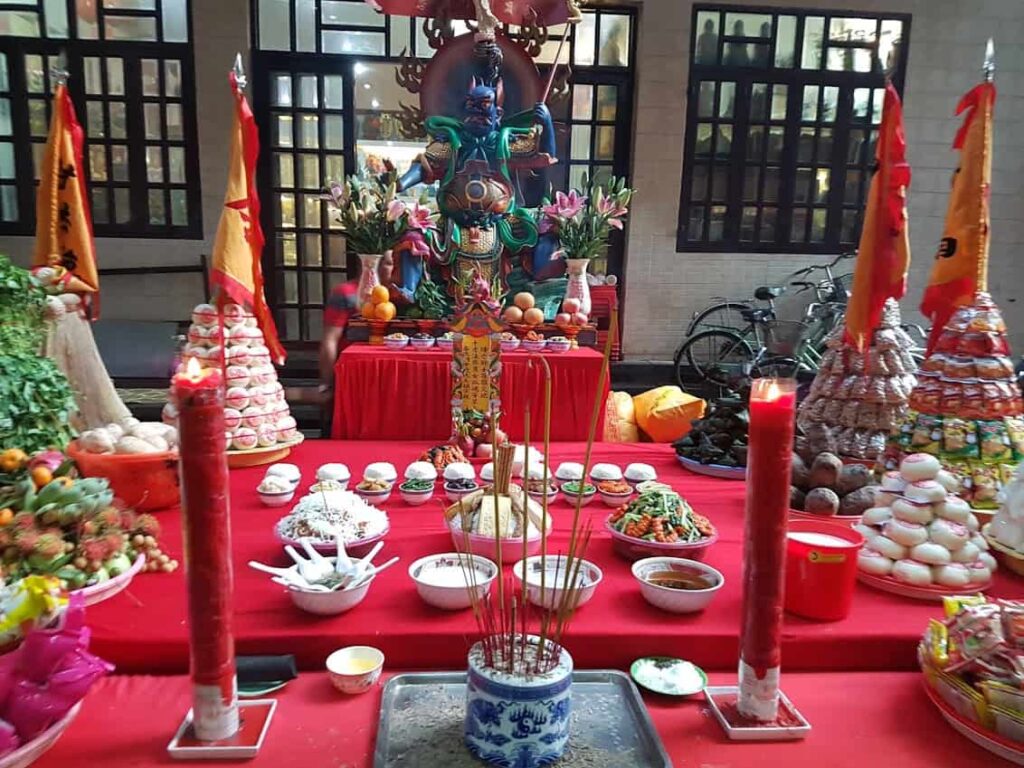
In Vietnamese spiritual life, a housewarming ritual is not simply a formal act of moving into a new place. It is considered an important ceremony that marks the connection between humans, their living space, and the unseen spiritual realms. When entering a new home, people do not only bring their belongings, but also their hopes, expectations, and concerns about future well being, peace, and prosperity.
For this reason, during housewarming rituals, alongside incense, food offerings, and ceremonial items, many families prepare various types of votive paper, especially different forms of spiritual money such as judgment official money, heavenly official money, earth official money, immortal official money, Cao official money, and even Buddhist official money. This practice is not random but reflects a deeply rooted belief system about how the spiritual world is structured and operates.
A new house as more than a physical space
In folk belief, a house is not merely a physical shelter but also a field of energy where human life interacts with unseen forces. When moving into a new place, it is believed that the land already carries its own history. It may have been inhabited before or may contain unresolved spiritual energies.
The housewarming ritual therefore serves as a way to announce one’s presence, seek permission, and establish harmony with the spiritual environment. It is a symbolic introduction to the unseen entities associated with that place, along with a request for acceptance and protection.
Within this context, offering different types of spiritual money becomes a symbolic form of communication with various layers of the spiritual system.
The idea of a multi layered spiritual administration
Traditional belief does not view the spiritual world as a single entity but as a structured system resembling an administrative hierarchy. Within this system, different deities and spiritual officials are responsible for different aspects of existence.
Some are believed to judge human actions, others record deeds, some grant blessings, others oversee land and karmic consequences, and some represent compassion and spiritual salvation. Each of these roles is symbolically associated with a specific type of votive money.
Judgment official money relates to spiritual judgment, Cao official money to record keeping, heavenly official money to blessings, earth official money to forgiveness, immortal official money to higher celestial beings, and Buddhist official money to compassion and spiritual guidance.
Offering all of these together reflects a desire to address every level of this imagined system.
Completeness as a sign of sincerity
One important reason people prepare all types of spiritual money is the belief that rituals should be complete. In folk thinking, completeness reflects sincerity and respect.
If only a few types are offered, some may worry that certain spiritual entities have been overlooked. This concern is not necessarily driven by fear, but by the desire to perform the ritual properly and respectfully.
Offering all types of spiritual money therefore becomes a way to ensure that the ritual is comprehensive, symbolically reaching all relevant spiritual authorities.
Psychological reassurance at a new beginning
Moving into a new home represents a significant life transition. It is a moment filled with both hope and uncertainty. Questions about the future, health, finances, and overall stability often arise.
Rituals such as offering various types of spiritual money help provide psychological comfort. They allow individuals to feel that they have taken all necessary steps to begin this new chapter under favorable conditions.
In many cases, the value of the ritual lies not in the material offerings themselves, but in the sense of reassurance and confidence it brings.
The blending of multiple belief systems
Another important aspect of this practice is that it reflects the blending of different belief systems.
Elements of Taoism appear in the concepts of heavenly, earth, and Cao officials. Folk beliefs contribute the idea of judgment officials. Buddhism introduces the concept of compassion through Buddhist official offerings. All of these elements merge into a single, integrated ritual practice.
This demonstrates that Vietnamese folk belief is not rigid but flexible, capable of incorporating different spiritual traditions to meet the needs of everyday life.
Symbolism over material value
Although these offerings take the form of paper money, they are not understood as literal currency. No one truly believes that deities require money in the human sense.
Instead, these items function as symbolic representations of sincerity, respect, and communication with the unseen world. Burning them is believed to transform the offerings into a form that can be received in the spiritual realm.
Offering a full set of spiritual money is therefore not about quantity, but about conveying a complete and respectful message.
The role of tradition and continuity
Another reason this practice continues is tradition. Many people perform these rituals in the same way their ancestors did, preserving cultural identity and continuity.
Housewarming ceremonies often involve multiple generations, creating an opportunity to pass down customs and shared values. Preparing a full set of spiritual money becomes part of this inherited cultural practice.
Modern perspectives
In modern society, views on burning votive paper and using various types of spiritual money have evolved. Some people continue to follow traditional practices, while others simplify rituals.
Many believe that sincerity and ethical living are more important than the quantity or variety of offerings. Some religious institutions also encourage reducing the use of votive paper for environmental reasons.
Despite these changes, the tradition of offering multiple types of spiritual money during housewarming ceremonies still persists as a cultural expression of belief.
The significance of offering a full range of monetary offerings during the housewarming ceremony.
Offering all types of spiritual money during a housewarming ritual is not merely a formal gesture. It reflects a complex belief system about the structure of the spiritual world and humanity’s relationship with it.
It expresses the desire to live in harmony with a new environment, to be acknowledged by unseen forces, and to receive protection and blessings. Even as interpretations change over time, this practice continues to hold cultural and psychological significance.
Ultimately, it provides a sense of peace and confidence at the beginning of a new chapter in life, while preserving traditions that have been passed down through generations.

ARTICLES IN THE SAME CATEGORY
The Spouse Palace in Tử Vi: Understanding a Relationship Through the Way Two People Walk Together
Memory Is Not a Camera: Understanding It Correctly to Argue Less with Ourselves
A Warm Kitchen Begins with the Way Family Members Listen to One Another
The Wealth Palace in Tử Vi: Understanding How a Person Builds and Uses Money
When Attention Is Fragmented: How to Regain the Ability to Focus in a Distracted Life
The Art of Closing Out the Day So the Mind Can Rest
ARTICLES IN THE SAME GENRE
Heavenly Officials in Vietnamese Folk Belief: Bestowers of Blessings from the Celestial Realm
The Judge Figures in Vietnamese Folk Belief: Guardians of Justice in the Afterlife
Earth Official Money in Folk Belief: Origins, Meaning, and Its Role in Spiritual Rituals
Buddhist Official Money in Folk Belief: Origins, Meaning, and Its Role in Spiritual Rituals
Heavenly Official Money in Folk Belief: Origins, Meaning, and Its Role in Spiritual Rituals
Judgment Money in Folk Belief: Origins, Meaning, and the Ritual of Offering to the Underworld Judges