

 Tiếng Việt
 日本語
日本語 한국어
한국어 中文 (中国)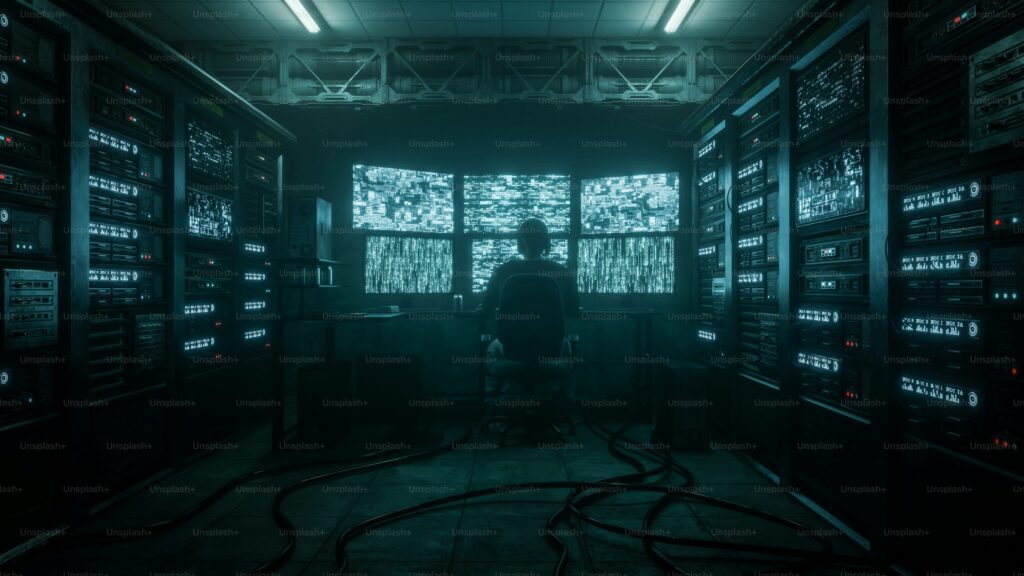
Throughout human history, every technological leap has brought profound changes not only in behavior and cognition but also in inner life and spiritual awareness. From the emergence of the internet to the rise of virtual reality (VR), augmented reality (AR), and the metaverse, human existence is no longer confined to the physical world. People are now beginning to “reside” in a parallel digital space. What deserves deeper reflection is not the technology itself, but the possibility that virtual worlds are gradually becoming an alternative reality—and from a spiritual perspective, a serious test of human nature.
This discussion moves beyond technology to explore the spiritual dimension, where the question is no longer simply whether we should use virtual worlds, but what we are becoming as we increasingly depend on them.
Virtual worlds: from imagination to reality
Virtual worlds were once purely the product of imagination. They appeared in literature and cinema long before technology made them possible. Films such as The Matrix, Ready Player One, and Black Mirror were not just entertainment; they carried a prophetic warning.
In those stories, humans live inside simulated realities while believing them to be real. They are confined within systems designed by unseen forces, gradually losing the ability to distinguish between illusion and truth. What was once fiction is now approaching reality.
Today, people can work, study, socialize, and even form emotional relationships within digital environments. A form of “digital self” exists for each individual—embedded in data, avatars, and online identities. This leads to a deeper question: are humans expanding their world, or quietly locking themselves inside an invisible cage?
A spiritual perspective: is the virtual world a new “realm”?
In many Eastern spiritual traditions, reality is not limited to a single dimension. There are concepts of multiple realms—layers of existence where consciousness can become trapped if awareness is lost.
Viewed through this lens, virtual worlds may resemble an intermediate realm—neither fully material nor purely spiritual. They are created by human consciousness, yet they exert influence over that very consciousness.
The danger lies in design. Virtual environments are engineered to attract attention, stimulate desire, and retain engagement for as long as possible. This resembles the spiritual concept of illusion—forces that distract individuals from their true nature.
When a person spends excessive time in virtual spaces, the loss is not just time, but connection. They may become detached from nature, silence, and authentic human relationships. Gradually, spiritual awareness fades, replaced by constant stimulation.
The erosion of deep thinking and knowledge
One of the clearest consequences of immersion in virtual environments is the decline of deep thinking. Digital spaces favor speed, brevity, and continuous stimulation. People become accustomed to scrolling rather than reflecting, reacting rather than contemplating.
This shift affects not only intellectual capacity but also spiritual development. Many traditions emphasize stillness and introspection as essential paths toward understanding oneself and the nature of reality.
When individuals are constantly pulled into streams of digital content, they lose the ability to pause. Without stillness, depth disappears. And without depth, self-awareness weakens.
In this sense, virtual worlds are no longer neutral tools. They become forces that pull human consciousness away from its inner core.
The risk of becoming “slaves” to virtual space
The idea of slavery here is not physical but psychological. It describes dependence—a condition in which individuals cannot detach from devices, cannot feel satisfaction without digital interaction, and cannot maintain focus without constant stimulation.
Modern platforms are built on behavioral psychology. They exploit dopamine-driven reward systems to keep users engaged. Every notification, every like, every short video acts as a small trigger of pleasure.
Over time, control shifts. Humans no longer use technology; technology begins to shape human behavior.
From a spiritual viewpoint, this represents a loss of inner sovereignty. A person who cannot govern their own mind cannot attain true freedom. When this condition spreads across society, it subtly reshapes collective consciousness.
Virtual space as a limitation rather than liberation
There is a paradox at the heart of virtual worlds. They are created to expand human possibilities, yet they can also limit human experience.
When everything can be accessed through a screen, people are less inclined to move, explore, or engage directly with the physical world. Life gradually compresses into a confined digital frame.
This has consequences beyond physical health. It affects emotional richness and spiritual growth. Human beings are not purely cognitive entities; they are embodied, emotional, and spiritual.
Many philosophical traditions view humans as integrated wholes. When one dimension is overstimulated—such as digital cognition—other dimensions weaken, including physical vitality and spiritual awareness.
The fading boundary between reality and illusion
One of the most profound risks is the blurring of the line between what is real and what is artificial. As technology advances, virtual experiences may become indistinguishable from physical ones.
This raises a fundamental philosophical question: what is real?
If a person experiences happiness in a virtual world, is that happiness authentic? If relationships exist entirely online, do they carry the same meaning as those in physical life?
From a spiritual perspective, reality is not defined solely by perception or emotion, but by alignment with deeper truth. When experiences are engineered to produce specific feelings, individuals may be deceived by their own perceptions.
The path to balance: technology and awareness
It would be simplistic to view virtual worlds as inherently negative. They offer genuine benefits, including global connectivity, access to knowledge, and creative possibilities. The issue lies not in the technology itself, but in how it is used.
From a spiritual standpoint, awareness is essential. Awareness does not mean rejecting technology, but engaging with it consciously.
A mindful individual understands when to disconnect, when to return to physical reality, and when to seek silence. They do not allow digital systems to dominate their attention or define their identity.
This balance requires discipline. It may involve limiting screen time, cultivating practices such as meditation, or simply spending time in quiet reflection.
virtual worlds as a spiritual test
Virtual worlds are not inherently dangerous, nor are they purely beneficial. They represent a new stage in human evolution, but also a test of human awareness.
The true challenge is not technological, but existential. It asks whether humans can remain conscious and grounded while navigating increasingly immersive environments.
Without awareness, virtual worlds may become invisible prisons—spaces where individuals willingly confine themselves, gradually losing touch with their authentic nature.
With awareness, however, these same technologies can serve as tools for growth, creativity, and connection.
The boundary between these outcomes is subtle. And ultimately, it is defined not by machines, but by human choice.

ARTICLES IN THE SAME CATEGORY
Healthy Boundaries: How to Protect Your Energy Without Becoming Cold
Slow Down to See Clearly: The Art of Living Without Being Swept Away
Keeping Promises to Yourself: The Quiet Foundation of a Trustworthy Life
When Attention Is Fragmented: Learning to Live Slowly in a World That Is Always Calling Our Name
Gratitude in the Age of Comparison: How to Stay Grounded in the Face of Things That Always Seem Lacking
When Silence Becomes a Way of Taking Care of Yourself
ARTICLES IN THE SAME GENRE
Tam Cam Part 2: The Vengeful Spirits of the Palace
Tam and Cam: The Palace Intrigue and the Original Ending – Part 1
The world is never short of those who judge others by their material possessions; however, the most concerning poverty of all is the lack of wisdom and self-cultivation.
Stay Away from Foolishness: Seven Forms of Self-Deception and the Path to Awakening
Letting Go of Attachment to Overcome Anxiety: When What Exhausts Us Is Not Life Itself, but the Way We Hold On to It
Drinking Tea or Living Life: When People Get Lost in Material Glamour and Forget Themselves