

 Tiếng Việt
 日本語
日本語 한국어
한국어 中文 (中国)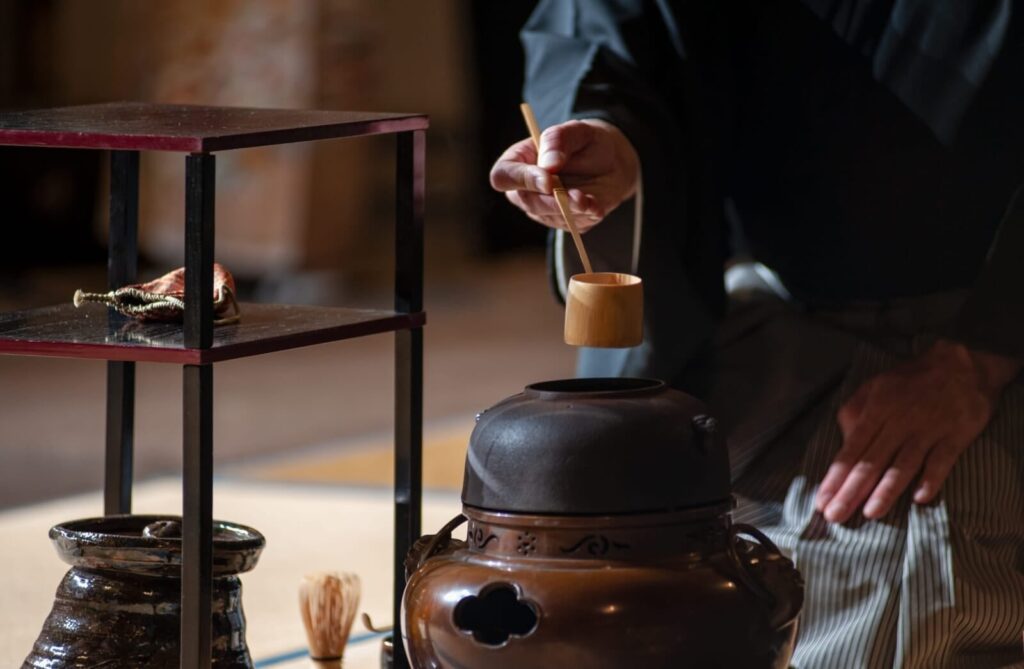
There is a simple idea that quietly reaches the core of human life: what we truly need is not an expensive pot of tea, but the state of mind to drink it. When the mind is unsettled, even the finest tea loses its taste. When the heart is calm, even ordinary hot water carries a quiet depth.
When material things become the measure of human value
In the fast current of modern life, people are gradually drawn into an invisible race. Tea is no longer enjoyed for its essence, and buying things is no longer about necessity. It becomes a way to prove something, to signal status, to avoid being left behind. New phones, luxury clothing, and expensive spaces begin to stand in for personal worth.
Yet the more people chase these symbols, the more a sense of emptiness grows.
An old Vietnamese saying reminds us that good wood matters more than a polished surface. It speaks to a truth that feels increasingly distant today. Value lies in what is inside, not in what is displayed. Still, many choose to trade inner peace for outward shine, without realizing how costly that exchange becomes.
Drinking tea is not an action, but a state of being
To truly drink tea is to arrive at a certain inner stillness. It begins when one sits down and allows distractions to fall away, when comparison softens and the need to prove fades. In that space, tea is no longer just a drink. It becomes a quiet reflection of the self.
The one who understands tea is not the one who owns the most, but the one who can appreciate it. In much the same way, happiness does not belong to those who accumulate endlessly, but to those who recognize and value what is already present.
When one knows enough, complaints begin to fade
Life is never complete. Work may feel unsatisfying, finances uncertain, relationships imperfect. Yet much of what we call lack comes not from reality, but from expectation. Old wisdom teaches that knowing what is enough is already a form of wealth.
A cup of tea often begins with bitterness before revealing a gentle sweetness. Life follows a similar path. If attention remains fixed on the bitterness, dissatisfaction grows. But with patience, another layer appears, and what once felt harsh begins to soften.
This shift in perception changes how one meets life itself.
Slowing down to avoid disappointment
Tea follows its own rhythm. Water must reach the right temperature, leaves must unfold in their own time. Nothing meaningful happens instantly. When people begin to understand this rhythm, their expectations begin to change as well.
The modern world encourages speed, early success, and immediate results. But life rarely moves in such a straight line. When reality does not match urgency, disappointment arises. Tea offers a quiet correction. It shows that forcing the process only weakens the result.
In both tea and life, depth requires time.
Letting go of calculation, keeping inner ease
When observing tea, one notices how the leaves move before settling. There is a natural progression from disturbance to stillness. Human emotions follow a similar course, though many people interrupt that process by reacting too quickly.
There is an old idea that patience prevents greater conflict. It is not about suppressing emotion, but about allowing it to pass without turning it into something heavier. In a world where reactions are immediate and comparisons constant, this becomes increasingly rare.
Taking a moment to sit quietly, even with something as simple as a cup of tea, creates space. In that space, many things lose their urgency. What once seemed worth arguing over begins to feel unnecessary.
Amid anxiety, a cup of tea brings one back
Anxiety has become a familiar presence. People worry about what lies ahead, about stability, about how they are seen by others. The mind moves constantly, rarely finding rest.
Tea introduces a different pace. The rising steam, the subtle fragrance, the quiet act of holding a cup all draw attention back to the present. For a moment, the noise fades.
True stability is not determined by surroundings, but by the condition of the mind. Without inner calm, no environment feels secure. With even a small degree of calm, the weight of uncertainty begins to lessen.
When people stop chasing what was never theirs
Much of modern consumption is driven by something deeper than need. It is an attempt to fill an invisible absence. Expensive things are often pursued not for their function, but for the feeling they promise to create.
Yet a person’s value has never been defined by what they own.
Some stretch beyond their limits just to maintain an image, believing that falling behind is something to fear. But the path they follow has no clear destination. Each step forward simply reveals another expectation waiting ahead.
Recognizing this changes how one moves through life. The desire to chase begins to soften, replaced by a clearer sense of what truly matters.
Simplicity is not the same as lack
There is a quiet contradiction in human behavior. The more one possesses, the more difficult it becomes to feel satisfied. As standards rise, fulfillment moves further away.
Those who understand enough experience something different. They find that contentment does not come from having more, but from needing less. Simplicity, in this sense, is not about deprivation. It is about clarity.
It is the ability to choose what is essential and release what is not.
What truly matters is not the tea, but the state of mind
Tea can be part of daily life, but the mindset to truly experience it does not come easily. In a world that rarely pauses, people lose the ability to sit quietly. Even in rest, the mind continues to wander.
A cup of tea becomes a small invitation. It asks nothing more than attention. It offers a chance to slow down, to return, to experience life with more depth rather than more accumulation.
Drinking tea is learning how to live
Sitting with a cup of tea is not just a habit. It is a way of observing, of understanding, of returning to something simple but essential.
Over time, a quiet realization emerges. What we truly need has never been something expensive or outwardly impressive.
What we need is a mind that is calm enough to feel, deep enough to understand, and light enough to let go.
Life does not require an expensive pot of tea. It requires the right state of mind to drink it.

ARTICLES IN THE SAME CATEGORY
Attention Needs Rest Too: The Art of Living Amid Too Many Things to Know
Healthy Boundaries: How to Protect Your Energy Without Becoming Cold
Healthy Boundaries: How to Protect Yourself Without Hurting Others
Slow Down to See Clearly: The Art of Living Without Being Swept Away
The Pause Before a Choice: Slow Down to See Clearly What You Truly Need
Keeping Promises to Yourself: The Quiet Foundation of a Trustworthy Life
ARTICLES IN THE SAME GENRE
Tam Cam Part 2: The Vengeful Spirits of the Palace
Tam and Cam: The Palace Intrigue and the Original Ending – Part 1
The world is never short of those who judge others by their material possessions; however, the most concerning poverty of all is the lack of wisdom and self-cultivation.
Stay Away from Foolishness: Seven Forms of Self-Deception and the Path to Awakening
Letting Go of Attachment to Overcome Anxiety: When What Exhausts Us Is Not Life Itself, but the Way We Hold On to It
Virtual Worlds and Spiritual Concerns in the Modern Age: When Humans Risk Becoming Prisoners of Their Own Creation