

 Tiếng Việt
 日本語
日本語 한국어
한국어 中文 (中国)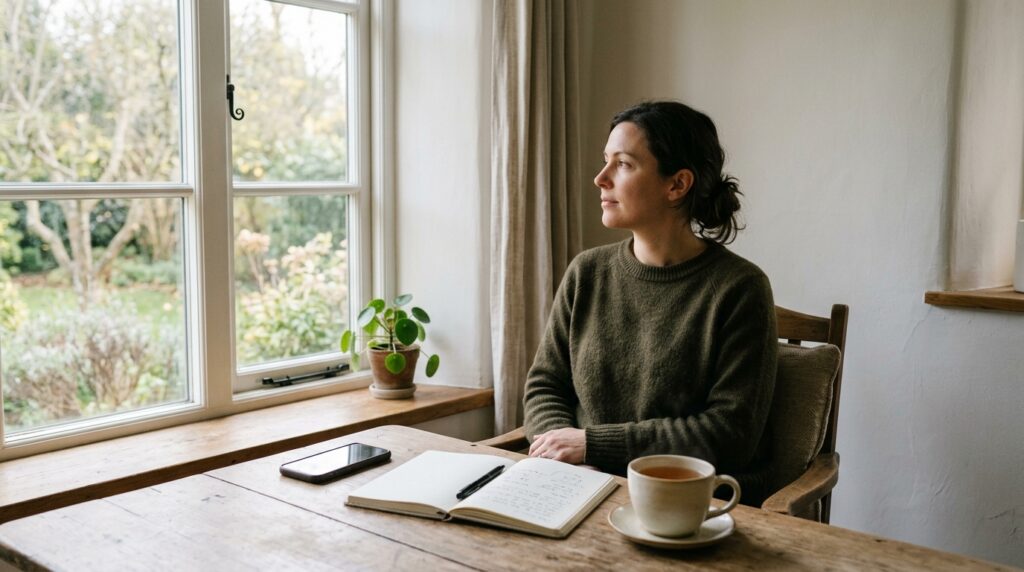
We are living in an age that is rarely truly quiet. Sound comes from the streets, conversations, work, advertisements, phone notifications, and countless streams of information running continuously across screens. Even when the lights in the room have been turned off, the mind may continue scrolling through unfinished tasks, words that trouble us, and information we do not know why we just read. This noise is not always loud, but it is persistent enough that many people gradually forget what it feels like to simply be still with themselves.
Under these circumstances, quiet is no longer a luxury reserved for those with plenty of time. It is a basic mental need, like sleep or a proper meal. Quiet helps people recognize what they are thinking, what they truly need, and what is merely a temporary pressure coming from outside. When we are no longer pulled along by every notification, invitation, and fear of missing out, we begin to see our choices more clearly.
Attention Is Part of Life
Many people often think that time is the most valuable asset, but in modern life, attention is no less important. We may devote an hour to one task, but if our minds are constantly shifting from messages to videos, from work to worries, that hour does not create a sense of wholeness. In contrast, a short period spent completely with another person, a page of a book, or a specific task can sometimes bring far more value than many hours of being present in a distracted state.
Attention determines what enters into us. The things we look at for a long time, hear frequently, and repeat often gradually influence our emotions, our way of thinking, and even how we evaluate ourselves. If each day the mind takes in only arguments, comparisons, bad news, and images arranged to provoke stimulation, we may become anxious without clearly understanding why. Therefore, caring for our attention is also caring for our inner life.
This does not mean that people must turn their backs on technology or reject all information. Phones, social media, and modern media provide many practical benefits. The issue lies in whether we use them intentionally or allow them to determine the rhythm of our lives. A tool is truly useful only when it serves human purposes, rather than quietly taking away our ability to concentrate and rest.
Why Are We Reluctant to Be Silent?
Silence can sometimes make us uncomfortable because it creates an opportunity for covered-up emotions to emerge. In the midst of busyness, we can postpone facing sadness, disappointment, jealousy, or anxiety about the future. When all external sounds grow quiet, the questions inside become clearer: Am I living according to what I believe? Is this relationship still healthy? Is my current work truly suitable for me? Am I tired because I am doing too much, or because I am doing things that have no meaning?
Because they do not want to face those questions, many people immediately turn to a screen, a conversation, or a series of tasks that need to be done. This approach may bring a momentary sense of relief, but it does not resolve the cause of the unease. The more we avoid it, the more strongly the mind tends to send signals. Sometimes restlessness is not a sign that we need more entertainment, but a reminder that we need to stop and listen.
Quiet is not a harsh self-examination. We do not need to sit still to judge ourselves or force ourselves to find answers to every problem. We only need to notice what is happening, without rushing to push it away or immediately turning every emotion into a decision. When viewed calmly, emotions often become less frightening. Giving a worry its proper name is already the first step toward no longer being completely led by it.
Starting with Small Pauses
There is no need to wait for a distant trip or a long vacation to practice stillness. We can begin with very small pauses during the day. After waking up, instead of immediately checking the phone, spend a few minutes drinking water, opening the window, and noticing the state of the body. Before starting work, we can write down the single most important task to complete, rather than opening many windows at once and allowing the mind to chase every demand.
During meals, try eating more slowly and do not turn that time into an opportunity to deal with messages. When walking, pay attention to the rhythm of your steps, your breathing, the light, and the changes in the surrounding space. These simple actions are not exercises for achieving a result. They help us return to the present, where life is actually taking place, instead of continually living in what has happened or what has not yet happened.
Another habit is to create notification-free zones. This could be the beginning of the morning, mealtimes, or the hour before bed. It is not necessary to turn off every device completely, but unnecessary signals should be reduced. When the phone is no longer constantly vibrating, the mind will gradually relearn how to be still. At first, a feeling of emptiness may appear, but this is usually a sign that an old habit is being adjusted, not proof that we cannot live without stimulation.
Learning to Do One Thing at a Time
Multitasking is often seen as a sign of agility, but in many situations, it merely causes our energy to be divided. Answering emails while listening to a meeting, eating while watching content on a screen, or talking while constantly checking the phone makes us present in many places without truly being present anywhere. After a day like this, people can easily feel exhausted even though they have completed many tasks.
Doing one thing at a time is a simple way to restore depth. When reading, read a sufficiently long passage before switching to something else. When talking, listen fully instead of preparing a response in your head. When working, set an appropriate period for concentration and then take a break. This arrangement does not slow life down in a negative sense. It helps us reduce unnecessary switching and devote energy to what truly matters.
Focus also makes ordinary things more meaningful. A kitchen cleaned while fully attentive is no longer merely a household chore to finish, but becomes an opportunity to restore order to the living space. An uninterrupted conversation can help the other person feel respected. A page read carefully can open up thoughts that scrolling through dozens of short pieces of content cannot provide.
Quiet Does Not Mean Distance
Some people worry that if they spend less time online, reply less immediately, or spend time alone, they will be seen as distant. But the quality of one’s presence cannot be measured by response speed. A person may reply very quickly without truly listening. Conversely, someone who knows how to preserve quiet often has a greater ability to return to others with more sincere attention.
In relationships, quiet also helps us distinguish between the need for connection and the fear of being left behind. When we constantly need others to confirm our worth, we easily react hastily to a delayed message, an unclear remark, or a brief silence. If we have enough inner space, we can wait a little longer, ask again calmly, and avoid turning speculation into a conclusion.
What matters is informing the people involved when we need time alone, rather than suddenly disappearing. A clear statement such as “I need to rest for a while; we’ll talk later” is often better than trying to maintain a conversation when we are already too tired. Healthy boundaries are not intended to punish others. They help each person maintain balance so that the relationship is not sustained by obligation, resentment, or thoughtless reactions.
From Quiet to an Intentional Way of Living
When we regularly create pauses, we begin to notice many things that were previously obscured by haste. We learn what kinds of information easily draw us in, when we usually lose focus, and what emotions we are using busyness to avoid. These realizations do not immediately make life perfect, but they give us the power to choose. We can unfollow a source that leaves us drained, reorganize our work schedule, decline an unsuitable appointment, or devote more time to something that truly matters.
Living intentionally does not mean that every day must be productive, calm, and clear-minded. People still have days when they are distracted, irritable, tired, or in need of simple entertainment. The difference is that we no longer view such states as a fixed fate. We know that we can stop, adjust, and begin again with one small step.
Quiet also teaches us to accept an important truth: not every empty space needs to be filled. Some questions need time before they can be answered. Some losses cannot be soothed by a few words of advice. There are periods when we simply need to get through each day with kindness toward ourselves. When we do not rush to fill every silence, we allow life to unfold with its full range of joy, sadness, waiting, and things that cannot yet be named.
Amid an age of noise, preserving a space for quiet is a small act with great significance. It protects our attention from being depleted, our emotions from constant stimulation, and each person’s ability to choose. We cannot make the world stop moving, nor do we need to completely abandon modern conveniences. But we can learn to put down the phone, listen fully to another person, walk without needing a purpose, and sit still long enough to realize how we are living. From those pauses, a clearer rhythm of life can begin.

ARTICLES IN THE SAME CATEGORY
Creating a Home That Knows How to Listen, So Everyone Has a Place to Return To
Small Promises and How They Quietly Rebuild Trust
Family Meals and the Art of Preserving Peace in a Busy Day
Gratitude in Modern Life: From a Fleeting Emotion to a Sustainable Way of Living
Keeping Promises to Yourself in Days When Giving Up Feels Easy
The Art of Saying No Without Making Yourself Seem Cold
ARTICLES IN THE SAME GENRE
Knowing What Is Right Is Still Not Enough: Why It Is Difficult for People to Change Their Habits
Familiarity Is Not the Truth: Recognizing Reasoning Traps in Everyday Life
Greenland and the Great Test of the World Order