

 Tiếng Việt
 日本語
 한국어
 中文 (中国)
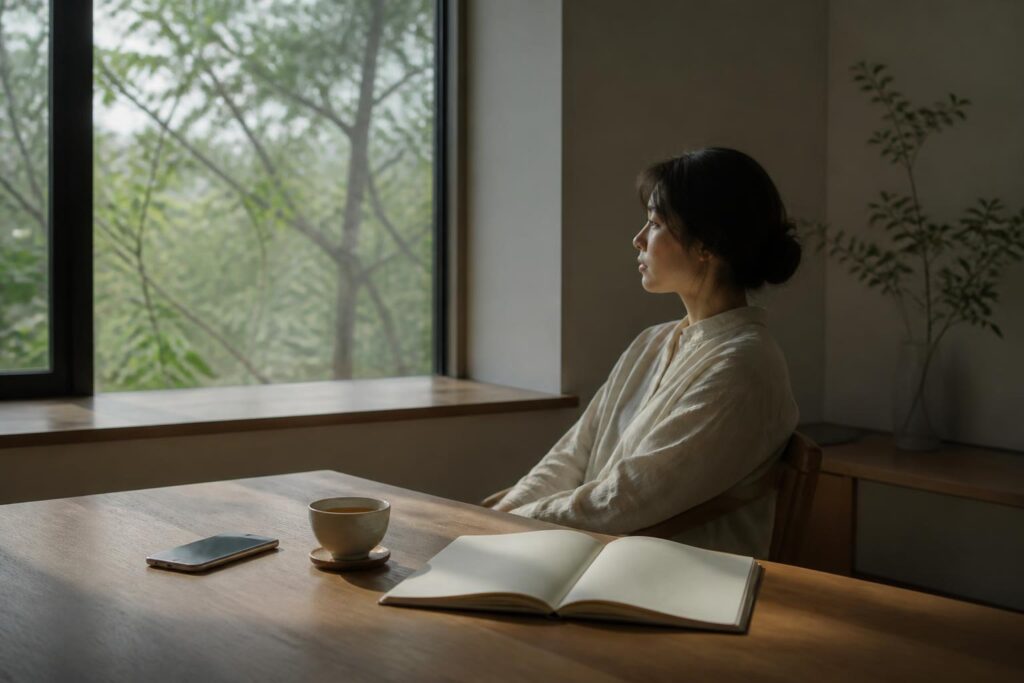
For many people, the morning begins before they are truly awake. A hand reaches for the phone, the screen lights up, a few notifications appear, and then messages, short videos, and new headlines gradually pull their attention elsewhere. By the end of the day, even after accomplishing quite a lot, people may still feel that their minds have never truly rested. Time passes in a state of busyness, but that busyness does not always mean progress.
In this context, intentional stillness becomes a need worthy of serious consideration. Stillness does not necessarily mean taking a long trip, staying in an isolated room, or spending hours meditating. It may be only a few minutes without opening more new content, a meal with no phone beside you, a walk without listening to anything, or an evening arranged so that the mind does not have to keep reacting. The value of stillness lies in helping people shift from a state of being pulled along to a state of choosing for themselves.
Why is it so difficult for us to sit quietly with ourselves?
Modern people often live in an environment that encourages instant responses. Messages need replies, work needs updates, the news is constantly changing, and online platforms are always recommending another piece of content. Not every notification is important, but every notification creates an invitation to pay attention. When those invitations appear too frequently, the mind can easily become accustomed to switching constantly instead of staying with an issue long enough.
The discomfort of having nothing to watch or do may also stem from our having grown used to using outside content to fill every empty space. We check our phones while waiting for the elevator, read the news while sitting in a vehicle, and continue scrolling before going to sleep. These actions are not always harmful, but when they happen automatically, they give people fewer opportunities to notice what they are thinking and how they are feeling.
Silence can also bring to the surface things that have been postponed. A worry about work, exhaustion within the family, a feeling of disappointment, or an unresolved decision may become clearer when there is no other content left to cover it up. For this reason, some people avoid stillness not because they do not need rest, but because they are afraid of facing questions that have no answers yet. However, avoidance does not make the problem disappear. It merely allows the problem to continue existing behind activities that seem harmless.
Stillness is not the same as stopping life
A common misunderstanding is that resting means doing absolutely nothing. In reality, intentional stillness does not require people to become passive or withdraw from life. Its purpose is to create a transitional space so that we do not immediately react to every stimulus. Within that space, a person can observe their thoughts, identify their emotions, and decide which matters truly deserve their attention.
The important difference lies in the word “intentional.” When we unconsciously scroll through dozens of pieces of content, we may be taking a break from a task, but we are not necessarily recovering. By contrast, when we deliberately sit by a window, make a cup of tea, walk slowly, or write down a few thoughts without checking notifications at the same time, we are establishing a clear boundary around distraction.
Stillness is not a way of denying everyday responsibilities, either. People with families still need to care for their loved ones, working people still have to complete their tasks, and those facing difficulties cannot rely on a few quiet minutes to solve everything. The value of stillness is more practical than that. It helps people see problems with less confusion, distinguish what can be handled immediately from what needs more time, and thereby avoid hasty reactions.
Ways to create stillness that fit into everyday life
There is no need to begin with an overly ambitious plan. A small habit repeated regularly is often easier to maintain than an ambitious commitment. For example, you might spend the first ten minutes after waking up without opening social media. Use that time to drink water, open a window, prepare for the day, or simply sit quietly. The goal is not to create a perfect morning, but to keep the new day from beginning with a reaction to other people’s information.
At work, stillness can be created through short periods of focus. Choose one specific task, turn off unnecessary notifications, and commit to not switching to something else for a manageable amount of time. When you finish, take a real break instead of immediately opening a new stream of content. This approach gives rest a boundary while helping you recognize where you have directed your attention.
Meals offer another simple opportunity. Not every family can maintain a long and completely quiet meal, but putting phones out of reach can still make a difference. When we do not scroll while eating, we can notice the taste of the food, the pace at which we eat, the conversation of the person sitting with us, and our own state of mind. A meal like this is not only a way to take in nourishment, but also a time to be present.
Walking without continuously playing content is another easy form of stillness. As you walk, pay attention to your steps, the light, the sounds, and the changes in the surrounding space. If a thought arises, there is no need to judge or resolve it immediately. Simply acknowledge it and continue walking. This activity creates just enough distance between a person and the flow of their thoughts that a thought does not immediately turn into worry or action.
Facing emotions instead of rushing to push them away
Stillness has meaning only when it allows emotions to be seen. This does not mean analyzing every sadness or finding the cause of every moment of irritation. Sometimes, naming an emotion accurately is already an important step. “I am tired,” “I am worried,” and “I am disappointed because my expectations were not met” are much clearer observations than the vague feeling that everything is terrible.
Writing on paper can make this process more concrete. The page does not need to look beautiful, reach a conclusion, or become a complete journal. You can begin with three questions: What is taking up most of my attention? What is within my ability to handle? And what needs to be accepted for now? The answers may not solve the problem immediately, but they help separate events, emotions, and actions into parts that are easier to see.
It is also important to distinguish stillness from isolating yourself when you need support. If someone is constantly losing sleep, falling apart, experiencing panic, or unable to carry out basic daily activities, a few quiet minutes should not be regarded as the only solution. In that situation, talking with someone trustworthy or seeking appropriate support is necessary. Stillness can open the door to awareness, but awareness sometimes needs to be followed by companionship and support.
Small changes with lasting significance
When people have moments of stillness, they often begin to recognize the difference between genuine desires and temporary impulses. Someone may realize that they do not need to read all the news, reply to every conversation immediately, or accept every invitation. Recognizing this does not mean becoming indifferent. On the contrary, it allows care to be directed to the right places instead of being divided among too many signals.
Stillness also changes the way we make decisions. When stimulated by anger, fear, or pressure to respond quickly, a reply may become harsher than necessary. Even a brief pause can be enough for the question “Do I want to solve the problem, or do I simply want to vent my emotions?” to arise. The answer will not always be comfortable, but the question creates an opportunity to choose.
For families, stillness helps each person be more fully present. A conversation uninterrupted by screens can make the other person feel heard. At work, focus can help identify important tasks instead of simply chasing the newest ones. In personal life, minutes that are not filled with something open up the possibility of reading a book, caring for the body, thinking about one’s direction, or simply resting without feeling guilty.
Start with a pause you can sustain
There is no single formula for stillness. Some people need a quiet room; others find it while gardening, cooking, organizing their belongings, or sitting beside a loved one without needing to say much. What matters is that the activity does not turn into another task that must be completed perfectly.
Choose a pause small enough not to create pressure. It could be ten minutes before bed, a meal without using your phone, a few steps taken during the day, or a single breath before replying to something that upsets you. After some time, observe what changes in your level of focus, the quality of your rest, and the way you react to events. There is no need to measure it with elaborate numbers; simply be honest about your experience.
Amid a world that constantly encourages us to update, respond, and keep going, knowing how to stop is a valuable ability. Stillness does not slow life down in a negative sense. It helps us regain the power to decide our pace, our direction, and what is worth caring about. When the mind has room to breathe, an ordinary day can become clearer, and small choices can be made with greater awareness.

ARTICLES IN THE SAME CATEGORY
The Quiet Space Amid Digital Life: How to Regain Focus and Peace
Gratitude in Everyday Life: How Looking Back at the Ordinary Can Help Us Live More Lightly
Quiet Moments in the Day: How to Regain Focus Amid the Noise of Modern Life
A Timely Thank-You Can Change the Way We Live Together
The Necessary Silence in a Day Full of Noise
When Slowing Down Becomes a Strength Amid a Life Full of Noise
ARTICLES IN THE SAME GENRE
The Bystander Effect: Why Do We Hesitate Before Helping Someone in Need?
The Default Choices Quietly Shaping Our Lives
Familiarity Is Not Always the Truth
Memory Is Not a Video Camera: Understanding It Clearly to Look Back at Ourselves
When Belief Guides the Way We See the World
Knowing When to Ask: A Skill That Opens the Door to Deeper Conversations