
Roundups · 11 November, 2026
A Tidy Room Can Open Up Breathing Space for the Mind
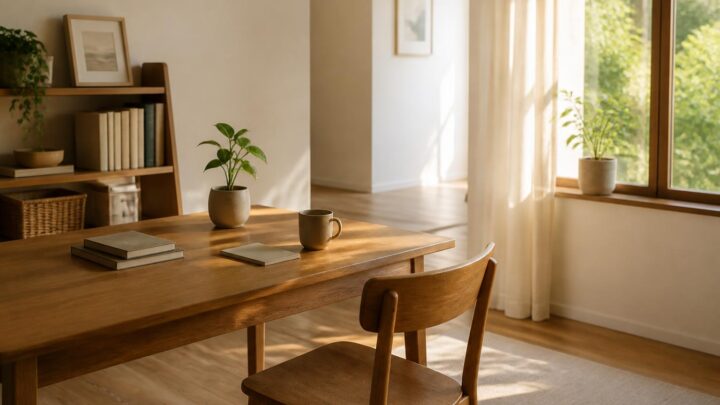
There are days when we come home exhausted, set our bag down in a corner, change clothes, and then sit quietly amid a room full of things. Everything is still there just as it was in the morning, but by the end of the day, the clutter seems to weigh more heavily. A chair covered with clothes, a few items that have not been put away, cardboard boxes waiting to be dealt with, and a desk with no remaining clear space can make it difficult for the mind to find a place to rest. The cause of our fatigue does not always lie in the room, but our living space can certainly affect how we experience our day.
Cleaning up, therefore, should not be viewed merely as a repetitive household chore. It is also an opportunity for each person to look again at the way they are living. A home with many belongings does not necessarily mean an untidy life, just as a minimalist room does not automatically guarantee peace of mind. What matters more is the relationship between people and the objects around them: which items are genuinely useful, which are kept out of habit, which are tied to memories, and which exist only because we have not had enough time to decide.
Our living spaces often reflect things that have not been resolved
In daily life, we often put unfinished tasks aside in a corner. It may be a shirt that needs mending, some papers that have not been sorted, an item bought but not yet given a place, or things we once intended to use but then forgot. Each item on its own may seem insignificant. Yet when they accumulate, the room can become a silent to-do list. Simply seeing them reminds us of the many things still left undone.
This does not mean that every messy room is a sign of a psychological problem, nor should tidiness be used to judge a person. There are periods when work, family care, or health make cleaning impossible to prioritize. An untidy space may sometimes simply show that its occupant needs rest or has to devote their energy to more urgent matters. For that reason, cleaning should begin with compassion for ourselves rather than with shame.
When we view a room as a map of our habits, we can recognize practical questions. Why do things often collect in one particular spot? Why does the desk quickly become crowded again? Why are certain objects kept even though they have not been used for months? These questions are not intended to force us to throw away a great deal, but to help us identify ways of living that do not suit us. Perhaps the problem is not that we lack discipline, but that items are being kept too far from where they are used, or that the storage system itself does not fit the rhythm of our actual lives.
Cleaning up is not a competition to see who can throw away the most
In many conversations about an organized lifestyle, people can easily focus on the number of things they have discarded. This perspective can sometimes create additional pressure. One person may keep many books because reading is an important source of joy. Another may need numerous tools for work, hobbies, or caring for their family. There is no single number that defines how many possessions are enough for everyone.
A more reasonable goal is to create a space that serves our present lives. An item is worth keeping if it is being used, has clear sentimental value, or has a specific role in the near future. By contrast, objects kept only out of guilt, fear that they might be needed someday, or reluctance to make a decision can be placed in a category for reconsideration. The final decision still belongs to each person, but correctly identifying why we are keeping an item often makes the choice feel lighter.
In particular, cleaning should not be turned into an extreme act. Throwing things away too quickly can lead to regret, while buying new storage boxes to conceal an excessive amount of stuff merely moves the clutter from one place to another. Before buying more organizing supplies, we should observe whether we truly lack storage space or simply have too many unnecessary things. A beautiful shelf cannot fully solve the problem if the habit of bringing things home remains unchanged.
Start with a small area and a clear goal
A house can make the person cleaning feel overwhelmed if they begin with the intention of doing everything in one day. Instead, choose an area with clear boundaries, such as the surface of a desk, a drawer, a shoe rack, or the corner near the entrance. The smaller the area, the greater the likelihood of finishing. Once it is done, we have an immediately visible result and more motivation to continue.
The process can also be simplified into a few questions. Is this item being used? Does it have a designated place yet? If I did not have it today, how would my life be affected? The last question is not meant to deny an object’s value, but to help distinguish genuine need from vague anxiety. For items that are difficult to decide about, we can place them in a temporary bag or box and note a time to reconsider them after a suitable period. This approach creates the necessary distance and helps us avoid making decisions while overly emotional.
After sorting, the important thing is to return the items we are keeping to their proper places. An object stored somewhere visible, easy to reach, and close to the activity in which it is used is more likely to be used regularly. Frequently used items should be kept in convenient locations; less frequently used things can be placed higher up or farther back. This arrangement does not require the home to be perfect; it only needs to reduce the number of times we have to search for and move things.
Physical space can create room for mental space
When a surface is restored to its proper function, the change in feeling sometimes comes not from the room becoming more beautiful, but from no longer having to process so many signals at once. A clear table can become a place to read, work, or eat instead of merely a place to pile things. An unobstructed walkway makes moving around simpler. An easy-to-find cabinet can make mornings less rushed. These small changes do not resolve every pressure in life, but they reduce some unnecessary friction.
Empty space also has symbolic value. It reminds us that not every spot has to be filled. In an age when it is easy to be swept up in shopping, updating, and accumulating, leaving a space empty can be an intentional choice. We do not need to immediately find a new item for a shelf we have just cleared, nor do we need to turn every corner of the home into a place serving a specific purpose. Some empty spaces exist simply to let the room breathe and the people in it rest.
Nevertheless, tidiness only has meaning when it suits the people living in that space. A home that is overly strict with young children, older adults, or a member whose schedule differs from everyone else’s can create additional stress. Organizing rules should be agreed upon to a reasonable degree, so that everyone knows where things belong and can help maintain the arrangement. When cleaning becomes a way to criticize one another, its benefits are easily lost. When it becomes a way of caring for a shared space, it can encourage cooperation and respect.
Keep the room tidy through repeatable changes
A major cleaning session can produce clear results, but daily habits determine whether the space remains that way. Returning an item to its original place after using it usually takes less time than having to look for it several days later. Before buying something new, considering where it will be stored and how often it will be used can help limit impulsive decisions. At the end of the day, spending a short amount of time returning misplaced items to their proper locations can make a difference if done consistently.
There is no need to set overly ambitious goals. We can begin by keeping one tabletop clear, dealing with paperwork as soon as we receive it, or checking one cabinet on a fixed day each month. If we miss a few days, we only need to return to the habit without treating it as a failure. A sustainable habit is not one that is never interrupted, but one that can be restarted with little resistance.
Sometimes, what needs clearing is not only our belongings but also our expectations. We may be holding on to objects connected to an older version of ourselves, plans that have changed, or an image of a life that never actually happened. Recognizing this does not necessarily mean throwing everything away. It simply allows us to choose more consciously: keeping what still accompanies us in the present and gently closing the chapter on what has fulfilled its role.
Conclusion
A tidy room is not a destination meant to prove that we have lived perfectly. It is an environment adjusted to support what matters: rest, work, connection, and self-care. Cleaning is not a substitute for addressing deeper difficulties either, but it can be a small step that helps remove some unnecessary obstacles from life.
When we begin with a small corner, ask honest questions about the value of each item, and respect our own pace of life, we create more than extra space in the home. We also have an opportunity to see more clearly what is taking up space in our minds, what truly needs to be kept, and what it is time to let go of. A clean tabletop, an unobstructed walkway, or an easy-to-find cabinet may be very modest changes. But from such changes, a lighter day sometimes begins.
Related articles
A Day Without Hurry Begins with How We Arrange the Little Things
There are mornings when we wake up with the feeling that we have already been left behind. Our phones are full of notifications, our desks hold too many things that have not been put away, and the day’s schedule is filled one appointment and task after another. Before we have even gotten out of bed,
Read more
When There Are Too Many Choices, How Can We Live More Clearly?
In modern life, people are often told that the more choices we have, the more freedom we have. We can choose our jobs, where we live, how we learn, how we shop, how we communicate, and even the pace of life that suits us. Yet when faced with too many possibilities, not everyone feels comfortable.
Read more
When Slowing Down Is a Way of Moving Forward
There are periods when people become so busy that they no longer recognize what they are living for. A day begins with unread notifications, continues with a packed work schedule, and ends with a feeling of exhaustion but still no peace of mind. We complete many tasks, respond to many people, and move from one
Read more
When Attention Becomes an Asset: The Art of Living Slowly Amid the Information Flow
Each day begins with a chain of small signals: the sound of an alarm, a screen lighting up, a few new messages, a to-do list, and information that seems never-ending. Before we have time to realize what we are thinking, we have already been pulled into the rhythm of other people. A new piece of
Read more
The Power of Small Promises in a Peaceful Life
Small Things That Create a Sense of Security In everyday life, people tend to pay attention to big promises. They may be promises to change, to always be there, to do something important for the family, or to start over after a difficult period. Yet the feeling of trust between people is usually not created
Read more
The Art of Living Slowly Amid a Day of Too Many Choices
On an ordinary day, we may have to answer dozens of messages, handle numerous tasks, choose what to eat, keep up with countless pieces of information, and constantly react to unexpected events. This pace of life is often seen as a sign of dynamism, but being busy does not always mean being effective. Some days
Read more