
Horoscopes · 12 November, 2026
The Phu The Palace in Tử Vi: Reflections on Love, Marriage, and Partnership
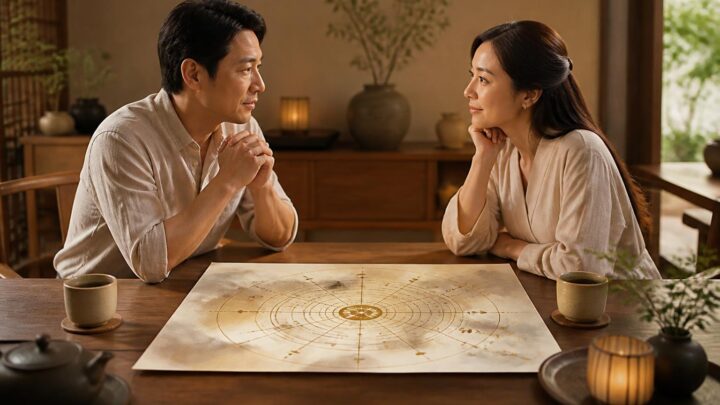
In Tử Vi, matters of love and marriage are often associated with the Phu The Palace. This is an area that attracts considerable interest, especially when people are faced with questions such as when they will meet a suitable partner, whether their marriage will last, or what changes their married life may go through. Even so, a cautious approach should not treat the Phu The Palace as a sentence that has already been written. The value of exploring this palace lies in its ability to suggest personality traits, emotional needs, patterns of attachment, and points that require attention when building a long-term relationship.
A Tử Vi chart is usually established based on many factors at the same time. Therefore, it is not possible to look at just one palace or one star and then conclude everything about a person’s marriage. The same sign may manifest differently depending on a person’s life circumstances, upbringing, emotional experiences, and level of maturity. Love is not merely a matter of being “compatible” or “in conflict”; it is also the process through which two people learn to communicate, share responsibilities, and adjust their expectations.
What Does the Phu The Palace Reflect?
From a traditional perspective, the Phu The Palace is related to the image of one’s spouse, how a person experiences married life, and the prominent themes in their romantic relationships. This palace may suggest what someone commonly seeks in a partner: stability, a sense of being cared for, intelligence, companionship in work, or personal space in which to develop.
What is important is that the “image of a spouse” in a chart does not necessarily describe one specific individual accurately. It may reflect the type of person the native is easily attracted to, the kind of energy that appears in relationships, or the qualities that person needs to learn to reconcile. For example, someone who wants a decisive partner may also have to face the feeling of being overpowered if the two do not agree on boundaries. A person who values freedom may need to learn how to maintain commitment without feeling that they are losing their individual identity.
Therefore, reading the Phu The Palace should begin with questions about needs and behavior, rather than merely searching for confirmation that a marriage will be good or bad. The more this palace is considered in relation to other parts of the chart, the greater the chance that its interpretation will be balanced.
The Phu The Palace Should Not Be Separated from the Chart as a Whole
In the practice of Tử Vi, no palace exists in isolation. When examining marriage, readers often need to consider the Phu The Palace alongside the Mệnh, Thân, Phúc Đức, Điền Trạch, and other related palaces. Each palace provides a distinct perspective. The Mệnh Palace suggests how a person expresses themselves and responds to circumstances. The Phúc Đức Palace is often associated with one’s spiritual foundation, family way of life, and the way one seeks peace of mind. The Điền Trạch Palace may suggest needs concerning living space, a sense of belonging, and stability in one’s private life.
A comprehensive perspective helps avoid the common mistake of exaggerating the meaning of a single sign. An element viewed as challenging in the Phu The Palace does not mean that the person will certainly fail in marriage. Conversely, many favorable elements cannot replace the respect, honesty, and responsibility of both people. A chart may provide a symbolic language for reflection, but daily behavior is what directly creates the quality of a relationship.
Common Themes Suggested in Interpretation
1. Emotional Needs and a Sense of Security
Everyone has a different way of experiencing love. Some people need clear words, some consider caring actions important evidence, while others want their personal space to be respected. When the Phu The Palace is viewed as a mirror reflecting one’s needs, it can help a person recognize what makes them feel loved and what is likely to hurt them.
Recognizing one’s needs does not mean demanding that a partner fulfill every desire. It is the first step toward having a more specific conversation. Instead of complaining, “You don’t care” or “You are always insensitive,” one can turn the issue into clear requests, such as setting aside time to talk, agreeing on how household chores will be shared, or giving advance notice when some personal space is needed. Specific discussions are often more helpful than leaving the other person to guess one’s feelings.
2. Types of People One Is Easily Attracted to and Points of Conflict
Observing the Phu The Palace can sometimes help reveal the types of people to whom one is usually drawn. One person may repeatedly choose partners who are strong, busy, or ambitious, and then later feel a lack of closeness. Someone else may easily become attached to people who need care, but gradually grow tired because the relationship is unbalanced.
Such tendencies are not an unchangeable destiny. They are more like patterns of choice that need to be recognized. When each person understands what they usually seek and why, they have more opportunities to change their standards, ask the right questions at the right time, and avoid repeating a hurtful pattern. Mature love is based not only on initial feelings but also on the ability to see the other person as a whole.
3. How Conflict Is Handled
No long-term relationship is entirely free of disagreements. What usually distinguishes a lasting marriage is not the number of times the couple argues, but how the two people respond after conflict occurs. When interpreting the Phu The Palace, traditional symbols can be used to raise questions about patterns of reaction: does a person tend to remain silent, avoid the issue, argue to the very end, or easily give in to preserve harmony?
Each way of responding has advantages and limitations. Silence may help cool things down, but it can also cause problems to build up. Speaking directly helps clarify misunderstandings, but without respect it can turn into an attack. Giving in may protect peace in the short term, but if it happens only one way, it will create a sense of unfairness. Understanding one’s own tendencies is a prerequisite for building healthier communication.
Marriage Is Not Determined by a Single Prediction
In modern life, many people turn to Tử Vi when they feel anxious about a relationship. They may want to know whether their partner is sincere, whether a marriage should continue, or when would be a suitable time to marry. These questions are entirely understandable, but relying on a single prediction can cause people to overlook the practical signs that are already present.
Before deciding to move forward with or maintain a marriage, it is necessary to observe how the two people treat each other in specific situations. Does the partner respect personal boundaries? Can the two of them talk about finances, both families, children, and future directions without avoiding the issues? When problems arise, do they work together to find solutions, or do they merely blame each other? These are practical questions that have more value than trying to find an absolute conclusion in a chart.
In particular, controlling, threatening, insulting, or violent behavior should not be justified by claims of compatibility, conflict, or fate. No interpretive method can turn a harmful relationship into a safe one. In such circumstances, the necessary priority is to protect oneself, seek reliable support, and consider options suited to the actual situation.
Using Tử Vi as a Means of Self-Reflection
The most useful approach to the Phu The Palace is to view it as a means of observing oneself. After reading an interpretation, instead of asking, “Is this certain to happen?”, one can ask, “Have I ever shown this tendency?”, “What makes me react this way?”, and “What part of this can I change?” These questions shift the practice of Tử Vi from a mindset of waiting for predictions to a process of understanding oneself.
People who are single can use these suggestions to identify their core values and healthy standards in love. Those who are married can look back at how responsibilities are divided, how care is expressed, and what is being neglected in their shared life. Couples can also use these themes to open a conversation, provided that they do not turn the chart into a tool for controlling or judging each other.
Ultimately, harmony does not come only from similarities. Two different people can still accompany each other well if they know how to respect their differences, agree on shared principles, and take joint responsibility for their choices. A relationship with a strong foundation is usually built through small acts: keeping promises, listening when the other person needs to share, acknowledging mistakes, and continually adjusting the way they live together.
Conclusion
The Phu The Palace in Tử Vi can open up many reflections on love, marriage, and each person’s need for connection. However, its meaning becomes practical only when it is placed within the chart as a whole and within the context of real life. A single sign should not be used to conclude that someone is certain to be happy, unfortunate in love, or incapable of having a good marriage.
Love requires clear awareness no less than emotion. Knowing what one needs, knowing how to listen, daring to discuss difficult issues, and respecting each other’s dignity are foundations that no chart can replace. When approached as a symbolic language for self-reflection, Tử Vi can help each person understand themselves more deeply and take a more active role in building a mature relationship.
Related articles

The Phúc Đức Palace in Tử Vi: The Spiritual Foundation and the Way We View Happiness
In life, some people seem not to possess many favorable circumstances, yet they remain calm in the face of upheaval. Conversely, others have adequate jobs, assets, and necessary relationships but frequently feel anxious. When discussing these differences, traditional Tử Vi often refers to the Phúc Đức palace as a symbolic area representing one’s spiritual foundation,
Read more
The Career Palace in Tử Vi: Career Orientation and Perspectives on Success
In Tử Vi, when people want to understand their career path, many often pay attention to the Career Palace, or cung Quan Lộc. The name can immediately lead readers to think of positions, wealth, or social status. In reality, the meaning of the Career Palace is broader than a list of occupations considered suitable. It
Read more
The Career Palace in Tử Vi: A Perspective on Career, Abilities, and Advancement
In modern life, questions about careers go beyond simply choosing a job with a good income. Many people also care about whether that work suits their personality, abilities, pace of life, and the things they truly value. Tử Vi often approaches this issue through the Career Palace, an area referred to when discussing a person’s
Read more
The Phúc Đức Palace in Tử Vi: Spiritual Foundations and How a Person Navigates Life’s Turbulence
What Does the Phúc Đức Palace Say About? In the Tử Vi system, each palace is often used as a symbolic lens through which to reflect on an aspect of human life. If the Quan Lộc Palace commonly evokes a person’s career path, and the Tài Bạch Palace relates to how someone approaches money, then
Read more
The Phúc Đức Palace in Tử Vi: Spiritual Foundations and How a Person Navigates Turbulence
In a Tử Vi chart, many people tend to focus first on the Mệnh Palace, Tài Bạch Palace, or Quan Lộc Palace because these positions are associated with personality, money, and one’s career path. However, when seeking to understand why some people remain steady in the face of adversity while others easily lose their bearings
Read more
The Career Palace in Tử Vi: Understanding Career Direction Through Abilities and Choices
In modern life, questions about careers are not limited to choosing a job with a stable income. Many people also wonder whether that work suits their personality, gives them a sense of meaning, and creates room for long-term growth. From the perspective of Tử Vi, the Career Palace is often used to reflect on one’s
Read more