

 Tiếng Việt
 日本語
日本語 한국어
한국어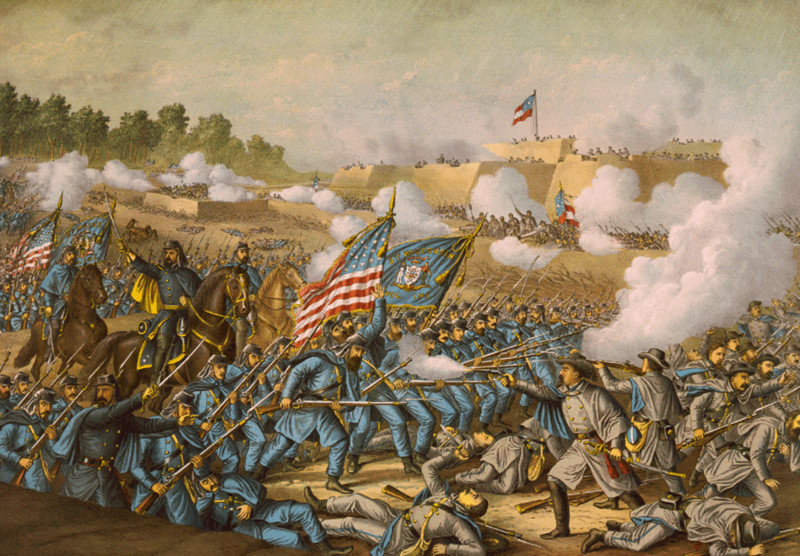
War is not a historical accident, nor is it merely the consequence of a few belligerent leaders. If we look deeply into the history of humanity, we will find that war appears regularly, repeatedly, under various forms and for different reasons. From rudimentary tribal warfare to world wars, from religious conflicts to ideological wars, from territorial disputes to resource wars, war seems to be an “inherent darkness” that runs parallel to the development of civilization.
The paradox is this: the more civilized humanity becomes, the more sophisticated and catastrophic war becomes. The more we possess philosophy, religion, law, and morality, the more capable people are of legitimizing violence on an unprecedented scale. This suggests that war is not just a political or economic issue, but a phenomenon with profound spiritual, psychological, and philosophical complexity.
To understand why war always erupts, one must view war not as an event, but as a collective manifestation of the human inner self.
War from a Religious Perspective: When Evil Wears a Sacred Cloak
Most major religions do not encourage war; in fact, many are founded on love, compassion, and non-violence. Yet, history shows that religion is frequently dragged into war or used as a legitimate tool for violence.
In Christianity, war was once justified by the concept of “just war,” especially during the Middle Ages. The Crusades are a prime example, where people believed that killing could become a sacred act if it served the “Will of God.” When religious belief combines with political power, war is no longer a conflict between human beings but is elevated to a battle between “righteousness” and “heresy.” The danger here is that when the enemy is seen as an adversary to God, their annihilation is no longer constrained by ordinary morality.
In Islam, the original concept of “jihad” meant an internal struggle to become better. However, when misinterpreted, it becomes a symbol of religious war, where violence is seen as a divine obligation. Similarly, in ancient Judaism, the wars in the Old Testament are often described as direct commands from God, intended to protect the chosen people.
Buddhism, though renowned for its spirit of compassion and non-violence, is not entirely immune. Historically, many dynasties and movements have invoked the Dharma to protect power, territory, or ethnicity. This demonstrates that religion itself does not create war, but when dominated by the human flaws of greed (Tham), hatred (Sân), and delusion (Si), it can become a powerful catalyst for collective violence.
War in Revelation: A Symbol of Inner Degradation
In the Christian book of Revelation, war appears as a sign of the end times. The images of warriors, bloodshed, and nation rising against nation are not just prophetic; they are also deep spiritual symbols. Revelation does not merely speak of a physical war but reflects the state of degradation of humanity when greed, fear, and arrogance reach their peak.
The Four Horsemen of the Apocalypse are often interpreted as symbols of conquest, war, famine, and death. It is notable that war does not stand alone but always leads to economic crisis, famine, and the destruction of life. This reflects a law: war does not just kill people; it destroys the entire living order.
If we look at Revelation from a spiritual perspective, war is the external manifestation of an internal battle. When people lose the ability to introspect, lose connection with conscience and compassion, violence becomes the common language of society. Revelation is therefore not just a warning for the future, but a mirror reflecting the present.
The Spiritual Perspective: Why Are Humans Attracted to War?
One of the most uncomfortable questions is: if war is so devastating, why are humans still attracted to it? Why does war always capture attention, stimulate powerful emotions, and sometimes even become romanticized?
From a spiritual standpoint, war awakens humanity’s deepest instincts. It offers a sense of meaning, identity, and purpose to individuals who feel lost. In war, people no longer have to confront internal emptiness because they are given a clear enemy, an ideal to sacrifice for, and a story to believe in.
War also creates the illusion of purification. Many cultures view war as a way to “renew” society, eliminate the weak or evil, and reestablish order. This is a dangerous misconception because it equates destruction with rebirth, and violence with salvation.
On a deeper level, war allows people to shed personal responsibility. When violence is collectivized, each individual feels they are just a part of the machine, thereby lessening the sense of guilt. Spiritual decline occurs when people stop self-examining their conscience and delegate morality to the crowd.
The Psychological Perspective: War and Greed, Hatred, Delusion, Jealousy
In Buddhism, all suffering stems from greed (Tham), hatred (Sân), and delusion (Si). War is the clearest collective expression of these three poisons.
Greed in war is not just for land or resources, but also for power, control, and a sense of superiority. Warring nations often justify their actions with security, but underlying this is the fear of losing status and the desire for domination.
Hatred in war is fueled by propaganda, prejudice, and historical animosity. The enemy is dehumanized, turned into a symbol of evil. In such a state, killing is no longer seen as a sin but becomes a duty.
Delusion is evident in the belief that war can solve the deep-seated problems of society. History shows that war only creates new cycles of suffering, but in the grip of collective delusion, reason is obscured by emotion.
Jealousy (or envy) plays a significant role, especially in the modern era. The comparison between nations, civilizations, and ideologies makes war a tool for affirming the collective ego. When the national self swells, peace becomes fragile.
Is Human War More Catastrophic Than Conflict in Nature?
In nature, conflict between species is usually about survival and has clear limits. Animals rarely kill beyond the necessity of life. They do not store up hatred, build ideologies, or remember history for eternal revenge.
Humans are different. Thanks to intellect and the capacity for abstraction, humans can turn personal conflict into global warfare. Humans know how to manufacture weapons of mass destruction, organize efficient killing apparatuses, and, most importantly, know how to legitimize violence with the language of morality, science, and religion.
Human war is catastrophic because it not only destroys bodies but also devastates the environment, culture, memory, and future. An animal species would never leave behind centuries of dead land, but humans can.
The most terrifying thing is that humans are conscious of the consequences, yet they continue. This is not survival instinct, but a misalignment of consciousness.
War is a Mirror Reflecting the Human Inner Self
War does not begin with bullets; it begins in the mind. When greed is unchecked, when hatred is nurtured, when delusion obscures wisdom, war becomes inevitable.
Religion, spirituality, and philosophy do not exist to justify war, but to warn humanity against the risk of self-destruction. Revelation is not a distant prophecy but a reminder that: when humanity ceases to turn inward and examine itself, the apocalypse will not come from the heavens, but from human hands.
Peace is not a political state but the result of an internal revolution. When humans learn to face the darkness within themselves, war truly has a chance to end.

ARTICLES IN THE SAME CATEGORY
Heavenly Officials in Vietnamese Folk Belief: Bestowers of Blessings from the Celestial Realm
The Judge Figures in Vietnamese Folk Belief: Guardians of Justice in the Afterlife
The world is never short of those who judge others by their material possessions; however, the most concerning poverty of all is the lack of wisdom and self-cultivation.
Stay Away from Foolishness: Seven Forms of Self-Deception and the Path to Awakening
When Artificial Intelligence Stops Being a Tool and Becomes a Habit Hard to Leave
Letting Go of Attachment to Overcome Anxiety: When What Exhausts Us Is Not Life Itself, but the Way We Hold On to It
ARTICLES IN THE SAME GENRE
The Epstein Files and the Shadow of Power: When Dark Rumors Reflect Back Through Cinema
MAGA and the Power Doctrine of Unpredictability: Why Donald Trump Turned Uncertainty into America’s Strategic Advantage
Religious Faith: Good, Evil, and the Journey from Enlightenment to Fanaticism
What to Note about “Apocalypse,” “Degenerate Dharma,” and Prophetic Culture
The Dark Side of the Internet and the Spread of Harmful Information
The Body’s Response to Fear